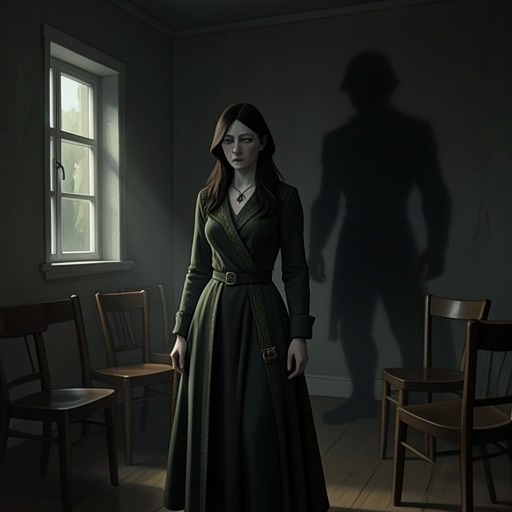
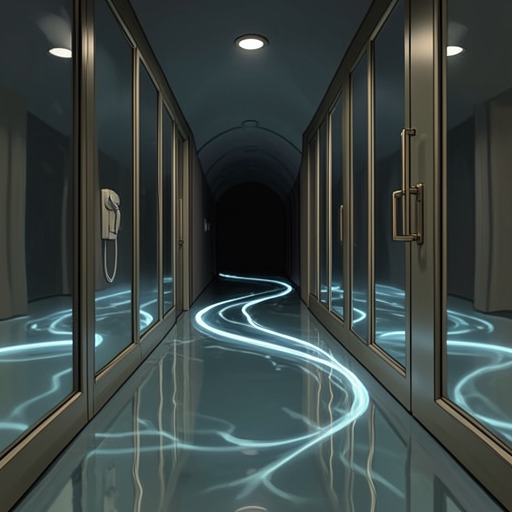
Event 1
Y/N’s Abandonment in the Woods
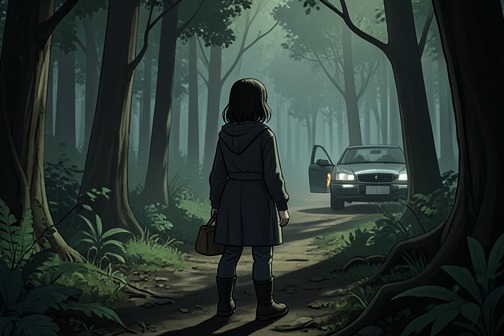
Y/N’s Abandonment in the Woods is the decisive separation that transforms Y/N from a dependent child within a family home into an isolated figure moving through an unfamiliar supernatural landscape. Her mother’s abrupt command, the unexplained car journey, and the final disappearance of the family vehicle leave Y/N with no explanation or secure place to return to. The forest therefore functions not merely as a setting but as the threshold through which her former identity begins to break apart.
## Causes and Circumstances
Y/N is initially removed from the household without being told where she is going. After her mother orders her to grab her belongings, Y/N follows the instruction while her father tells her to get into the car. The departure is marked by hostility: her father slams the door behind her, and her mother watches her with a death glare before demanding that she get in. Y/N’s inability to understand the reason for the journey makes the event a sudden collapse of family security rather than a planned move explained to her.
The journey continues for several hours, during which Y/N does not know the destination. When her mother finally opens the car door, she tells Y/N to go outside, promises to come out as well, and instructs her to take her belongings. The promise is immediately betrayed. As soon as Y/N leaves the vehicle, her mother closes the door and drives away rapidly. The abandonment is thus carried out through deception as well as physical removal: Y/N is induced to leave the car under the expectation of continued parental presence, only to discover that the adults have deliberately left her behind.
## The Abandonment and the Forest
Y/N calls after her mother and pleads for her to return, but the car recedes into the distance until it can no longer be seen. Looking around, Y/N finds no house, road, or recognizable human community; she sees only trees and forest. Her immediate reaction is that the place looks creepy, a response that establishes the forest as threatening before any supernatural encounter is fully revealed.
Y/N has brought a bag, and she picks it up before walking into the woods in the hope that someone nearby might be able to help her. This movement gives the abandonment its second stage. The parents create the separation, but Y/N must then act within the consequences, carrying the few possessions available to her and searching for an unknown rescuer. She continues walking for a long time without finding anyone. The stretched interval between the departing car and the later appearance of another figure turns the forest into a liminal zone: Y/N is no longer protected by the family, yet she has not entered a new community or understood the forces surrounding her.
## Threshold Encounters and Repeated Capture
The abandonment becomes the opening pattern for later episodes in which Y/N repeatedly crosses boundaries without controlling the terms of passage. At one point, a shadow pulls her inside a mirror after [Jin](entity:character-recall-character-jin-962fbeb69b78)’s body falls to the ground. The mirror feels like water, and Y/N finds herself inside it, converting the earlier movement into the woods into a recurring structure of forced transition. In both cases, a familiar boundary gives way to an inaccessible space: the road and car abandon her in the forest, while the mirror carries her into another enclosed world.
Later, Y/N again attempts to escape but is seized from behind by [Jackson](entity:character-recall-character-jackson-aa079ef98c23), who pulls her close and tells her not to run because they are so close. The scene repeats the central contradiction established by the abandonment: movement promises freedom, yet every route away from danger can become another form of capture. Y/N’s later struggles are therefore not detached from the forest episode; they develop its original condition of displacement into a cycle of pursuit, confinement, and attempted escape.
## Consequences for Y/N’s Story
The event separates Y/N from the parents who were her immediate human authorities and places responsibility for survival on Y/N herself. It also precedes the discovery of the larger secrets surrounding her life. Her return to the family house eventually reveals her mother on the ground in a puddle of blood, and Y/N later opens a locked book with a key and begins reading an entry dated 14 April. These discoveries recast the earlier abandonment: what first appears to be an inexplicable act of parental cruelty becomes part of a story in which Y/N’s family history, violence, and hidden knowledge are progressively exposed.
The forest episode also prepares Y/N for encounters with [J-Hope](entity:character-recall-character-j-hope-4d72d56c93de) and the vampire world. After the long, unsuccessful search for help, Y/N encounters J-Hope, who asks why she ran away. His appearance makes the abandonment the point at which Y/N’s isolated flight intersects with the supernatural community. The encounter does not restore the family structure; instead, it redirects Y/N toward a new and dangerous network of relationships.
## Narrative Significance
As a ritual of separation, Y/N’s Abandonment in the Woods suspends Y/N between identities. The family removes her from an ordinary domestic space, the forest withholds any immediate replacement for that space, and the later supernatural crossings gradually reorganize her belonging. The episode’s emotional force comes from the mismatch between Y/N’s expectation of care and the parents’ calculated withdrawal: the mother says she will follow, then drives away, leaving Y/N to call after a disappearing vehicle.
The wider plot repeatedly returns to this structure of separation and re-entry. Y/N is pulled into the mirror, pursued by hostile figures, and later joins others in a hand-holding triangle while attempting to act against [Gehan](entity:character-recall-character-gehan-fa2d31b153a4). Even the eventual intervention of [Assiah](entity:character-recall-character-assiah-286c5e1e8c00), who gathers the group and makes them slowly disappear before sending Y/N to a new home, echoes the original displacement while changing its terms. The first abandonment is uncontrolled and frightening; later transitions are shaped by supernatural powers and collective action. In that contrast, the event establishes the central question of Y/N’s arc: whether being removed from one world must always mean being powerless, or whether displacement can eventually become the beginning of self-directed transformation.
Event 2
Y/N’s First Encounter with the Vampires

Y/N’s First Encounter with the Vampires is the decisive threshold between Y/N’s abandoned human life and the violent supernatural order centered on [Vampire Castle](entity:location-recall-location-vampire-castle-6806682c0f47). What begins as a desperate search for shelter becomes an encounter with beings who smell her blood, restrain her, and decide that she can remain among them. The event establishes the central imbalance of the story: Y/N arrives without knowledge, protection, or a home, while the vampires possess the castle, the rules, and the power to define what she is.
## Causes and Background
Y/N reaches the castle only after her mother abandons her. Her mother tells her to get out of the car and take her belongings, implying that she will follow, but closes the door and drives away as soon as Y/N steps out. Y/N cries for her mother to return while the car recedes into the distance, leaving her alone and unable to see it anymore. This is not a chosen adventure but a forced separation: Y/N is deprived of the familiar world before she has any understanding of the danger waiting ahead.
The journey then becomes a passage through increasing uncertainty. Y/N walks for some time as night deepens toward midnight. In the distance she sees a giant castle and imagines that it may offer refuge. Rain begins heavily, turning the castle into the only visible destination and making the decision to approach it practically unavoidable. Her first movement toward the vampires is therefore shaped by need rather than curiosity. The castle appears as shelter from the weather, but its scale and darkness also signal that the protection it offers will come at a price.
## Arrival at the Castle
Y/N reaches the castle door and discovers that it is already open. She enters a very dark interior and proceeds through a dark corridor, still treating the building as a place where she might be safe. The threshold is significant because the open door does not represent hospitality in any secure sense; it allows Y/N to cross into a space whose inhabitants have not consented to her arrival and whose conditions she cannot read.
Her movement through the corridor ends when she bumps into someone. The unseen figure tells her to watch where she is walking, but the exchange quickly shifts from accidental contact to predatory attention. The figure remarks that Y/N smells very nice, and Y/N reacts with confusion. Someone suddenly touches and grabs her wrist. When Y/N demands to be released, the figure refuses, saying that he is not inclined to let her go. The physical seizure converts the castle from possible refuge into a site of immediate bodily danger. Before Y/N knows what the residents are, her body has already been treated as something available for their interest and control.
## The Vampires’ Revelation
The disturbance brings another man into the light. He asks what all the noise is about, and the newcomer addresses [Jin](entity:character-recall-character-jin-962fbeb69b78), asking who the human is. Jin identifies Y/N as someone lost in the woods who has no one. That description is both factual and consequential: it presents Y/N’s abandonment as the reason she is vulnerable, and it also gives the vampires a rationale for deciding that she can be kept. When the other man asks whether they can keep her, Jin agrees.
The conversation makes the power structure plain. Y/N is not invited to choose whether to stay; her isolation is converted into permission for others to claim her. Her question about why the vampires are so strange receives Jin’s direct answer that they are not human. Another vampire then names their nature plainly: they are vampires. Y/N struggles to repeat the word in shock, while Jin confirms it impatiently. The disclosure destroys the last ordinary explanation for what is happening, but it does not release her. Knowledge arrives at the same moment as continued confinement.
## Immediate Narrative Consequences
The encounter establishes several recurring pressures in Y/N’s later story. First, separation leaves her exposed to people who can redefine her circumstances. Her mother’s abandonment removes the social protection that might have carried her home; the vampires then fill that vacancy by deciding that she belongs in their castle. Second, the scene links blood-related desire with physical restraint. The attention to how Y/N smells and the grip on her wrist foreshadow the repeated danger of her being treated as a human blood vessel rather than as an autonomous person.
The encounter also introduces the pattern of revelation through thresholds. Y/N crosses from the roadside into the castle, from darkness into the vampires’ presence, and from an ordinary understanding of humanity into knowledge of the supernatural. Later events repeat and intensify this structure: [J-Hope](entity:character-recall-character-j-hope-4d72d56c93de) is found after Y/N runs away, Y/N discovers her mother dead inside the house, and a diary becomes a record of concealed history. Y/N is pulled inside a mirror by a shadow, returns to her room after the mirror disappears, and eventually confronts [Gehan](entity:character-recall-character-gehan-fa2d31b153a4) through a blood-red moon, a triangular joining of hands, and the imagined gates of hell. These later thresholds do not replace the first encounter; they echo its original movement from helpless entry toward increasingly active confrontation.
## Function and Significance
As a plot event, Y/N’s First Encounter with the Vampires combines deprivation, approach, capture, identification, and revelation. The abandoned child seeks a door that is open, but the open door leads to a community that immediately sees her vulnerability and debates keeping her. Jin serves as the first interpreter of this new world, yet his explanation is emotionally harsh: he supplies the truth that the others are not human without offering Y/N meaningful safety or control.
The event’s lasting importance lies in its unstable promise of belonging. Y/N arrives because she has been left with no one, and the vampires respond by offering a place within the castle only in the form of possession. The contrast governs the larger narrative. Y/N will later be seized, pursued, transported through mirrors, and caught in conflicts over blood, memory, and power; she will also resist, join hands with her light and dark selves, push Gehan away, and imagine the gates of hell into existence. The first encounter is therefore both an origin of danger and the beginning of the process by which Y/N moves from being someone others claim to someone capable of determining what happens next.
Event 3
The First Vampire Feeding

[The First Vampire Feeding](entity:event-recall-event-the-first-vampire-feedi-6390918bd3f4) is the first direct attack in which [Jimin](entity:character-recall-character-jimin-f9655c4e2151) and V drink Y/N’s blood, converting an encounter marked by fear and possessive claims into a physical trauma that shapes the story’s later treatment of trust, memory, and agency. The scene establishes blood as both a source of danger and a medium through which the vampires define their relationship with Y/N.
## Causes and Background
The feeding follows Y/N’s abandonment by her mother, who leaves her after telling her to get out of the car and then drives away, leaving Y/N isolated and frightened. When Y/N encounters the vampires, that vulnerability is immediately intensified by their attention. She remains silent and looks down with a scared expression as someone approaches her ear, while Jimin asks why she is so afraid. V then asserts possession, insisting that Jimin move away because Y/N is his; [Jin](entity:character-recall-character-jin-962fbeb69b78) interrupts by declaring that she belongs to all of them. Their language frames Y/N not as a person whose consent matters but as an object jointly claimed by the group, preparing the scene’s movement from verbal possession to physical violation.
The transition is abrupt and disorienting. Y/N closes her eyes briefly and finds herself seated in a somewhat girlish bedroom, with V still holding her. The change of location removes her from the immediate social space where resistance might be possible and places her inside a controlled interior. V observes that they are now alone, while Jimin and V smirk. The room therefore functions less as a refuge than as a concealed setting in which their shared claim over Y/N can be enacted without interruption.
## The Feeding and Immediate Physical Consequences
Jimin announces that he has waited long enough and proposes getting a drink, a formulation that reduces the coming assault to an act of appetite. V agrees, and the two approach Y/N from opposite sides: Jimin moves toward the right side of her neck while V closes in on the left. Y/N shuts her eyes in fear as sharp pain strikes both sides of her neck. She struggles against V’s grip, but he pulls her closer and tells her not to bother resisting. The scene makes the imbalance of power explicit: Jimin and V coordinate their movements, while Y/N’s only available responses are fear, silence, and unsuccessful physical resistance.
Jimin and V then begin drinking from the wounds. Jimin praises Y/N’s blood as delicious, turning the bodily violation into an expression of vampire appetite while also marking her blood as unusually desirable to them. Y/N cries and gradually feels herself fading, a response that conveys more than pain: the feeding threatens consciousness, bodily control, and continued survival. The attack is therefore not merely an intimate or predatory gesture but a moment in which Y/N’s body becomes the site of a struggle between her own vulnerability and the vampires’ consumption.
## Aftermath, Memory, and Narrative Significance
The immediate aftermath confirms the feeding’s physical cost without offering reconciliation. Y/N wakes alone, discovers blood stains on the bed, and feels dried puncture wounds on both sides of her neck. Her brief question about why this had to happen to her registers the attack as an inexplicable personal violation rather than an accepted feature of vampire life. The scene’s isolation is crucial: the attackers disappear, but the marks remain, converting a fleeting act of predation into evidence carried on Y/N’s body. Later blood-drinking scenes repeat this pattern of threatened trust, including an assault in which a character drinks from Y/N while she cries and wonders why she trusted him, making the first feeding a template for the story’s recurring conflict between intimacy and danger.
The event also gains significance from the book’s wider struggle over memory. Y/N subsequently encounters supernatural transitions in which a mirror pulls her into its interior, returns her to her room, and leaves her trying to understand what has happened. Jin later explains that he sacrificed his power to imprison other beings in a mirror and used what remained to make the wounded vampires forget that the others had ever been there. At another point, [Assiah](entity:character-recall-character-assiah-286c5e1e8c00) explicitly states that she erased Y/N’s memory. These later acts of concealment do not erase the feeding’s narrative importance; instead, they place it within a world where bodily evidence, written records, supernatural spaces, and enforced forgetting compete to determine what can be known. The feeding is thus both an origin point for Y/N’s mistrust and an early demonstration that control over her body is repeatedly accompanied by attempts to control the story she can remember.
In structural terms, the scene moves through a compact sequence of vulnerability, enclosure, coordinated attack, blood loss, and aftermath. Y/N begins already displaced by abandonment, is transported into a private room, loses agency during the assault, and awakens to material proof of what occurred. That sequence anticipates the book’s later cycles of capture, escape, rescue, possession, and attempted restoration. Yet the feeding also foreshadows a change in the distribution of power. Although Y/N is initially treated only as a source of blood, later events allow her to seize a glass ball, push [Gehan](entity:character-recall-character-gehan-fa2d31b153a4) away, and summon the gates of hell through concentrated will. The contrast does not make the original violence harmless; it shows how the narrative develops from a body acted upon toward a protagonist capable of acting upon the supernatural forces that once controlled her. The First [Vampire](entity:creature-recall-creature-1b7e05785f01) Feeding remains decisive because it establishes the wound from which that contested agency emerges.
Event 4
Y/N’s Escape and Retrieval
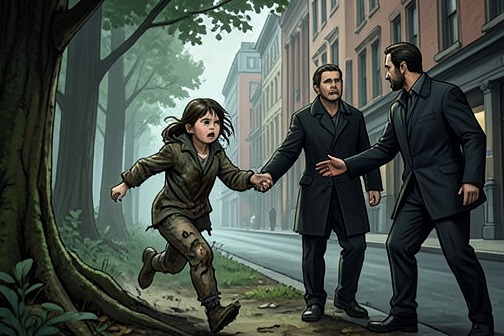
Y/N’s Escape and Retrieval marks the first major cycle of separation, exposure, attempted refuge, and forced return. After being abandoned by her mother and later finding herself in a dangerous household, Y/N runs into the forest, reaches a city, briefly accepts shelter from a stranger, and is intercepted by [J-Hope](entity:character-recall-character-j-hope-4d72d56c93de) and [Suga](entity:character-recall-character-suga-27f45cc854e4). The episode establishes escape as both an act of self-preservation and a movement toward new danger, while the retrieval recasts J-Hope and Suga as protectors whose protection remains inseparable from the threatening world Y/N is trying to leave.
## Causes and Background
The escape begins with abandonment rather than a planned journey. Y/N’s mother tells her to leave the car with her belongings, then closes the door and drives away rapidly. Y/N watches the car disappear and calls for her mother to return, but the immediate result is isolation. This departure removes the ordinary human protection Y/N expects from a parent and places her in an unfamiliar environment before she has any reliable direction or destination.
Once inside the house, fear becomes the direct cause of the next flight. Y/N thinks that she should run because the place is too dangerous, then moves down the hallway while hoping that nobody sees her. Finding the front door open, she does not wait to understand the building or negotiate with its occupants; she crosses the threshold and encounters only forest outside. Her escape is therefore defined by urgency and concealment. It is a refusal of immediate danger, but not yet a route toward a known alternative.
## Flight Through the Forest
Y/N runs straight into the woods and continues for roughly thirty minutes before exhaustion forces her to sit down. Rain begins suddenly, turning the forest into a hostile transitional space rather than a protective wilderness. The next morning, the rain is still falling, though less severely, and Y/N decides to continue. After walking for about an hour, she finds a road and follows it for another five to ten minutes until she reaches a city.
This movement from house to forest, from forest to road, and from road to city gives the escape a clear spatial progression. Each step seems to promise greater contact with ordinary society, yet none supplies security. The forest provides concealment but exposes Y/N to weather and exhaustion; the road offers direction but no companion; the city finally makes shelter possible, though only through dependence on a stranger. The episode thus treats freedom as provisional and physically costly rather than as a clean break.
## The Temporary Refuge and the Interception
In the city, an unidentified woman offers Y/N a place to stay, explaining that she has an apartment with a spare room. Y/N accepts the offer, but the proposed refuge is immediately shadowed by apprehension: she wonders whether the woman will get into trouble if the boys discover that Y/N is living with her. Even at the moment when shelter becomes available, Y/N remains mentally tied to the people from whom she fled. The fear of discovery demonstrates that escape has not severed the previous relationship; it has merely transferred the danger into a new setting.
The retrieval occurs in an elevator. The men accompanying Y/N’s temporary host appear familiar and stand in the corner whispering to one another. When the elevator reaches the seventeenth floor, the doors open and the woman leaves, followed by Y/N. Before Y/N can get out, however, the doors close and the elevator begins descending. The closing doors convert an ordinary exit into a trap and isolate Y/N from the refuge that had just been offered.
The person revealed is J-Hope. Y/N recognizes him with shock and asks what he is doing there; J-Hope answers by asking why she ran away. The confrontation is not presented as a negotiation between equals. Y/N admits that she was scared, and J-Hope responds by hugging her and assuring her that she does not need to be afraid and that he will never hurt her. Suga then reveals himself as the other hooded man. Their intervention combines surveillance, physical interception, and reassurance: they find Y/N, prevent her departure, and attempt to redefine the return as protection.
## Return to the House
J-Hope tells Y/N that as long as she is with him and Suga, nothing will happen to her. Y/N thanks him, and the three remain silent until they reach the ground level. They leave the building together, walk to a car, and take their places with J-Hope and Suga in front and Y/N in the back. The silence during the ride preserves the emotional distance created by the escape; reassurance has been offered, but trust has not been fully restored.
When they arrive back at the house, J-Hope and Suga get out, followed by Y/N. Suga tells her that he hopes the others will forgive her, and Y/N agrees. His remark makes the return a social as well as a physical event: Y/N is being brought back to a community whose judgment still matters and whose forgiveness is uncertain. Retrieval ends the immediate flight, but it does not erase the reasons Y/N fled or settle whether the house is a refuge, a prison, or both.
## Consequences and Narrative Significance
The event establishes a recurring structure in Y/N’s story. She repeatedly crosses boundaries in search of safety, only to encounter another threshold, another watcher, or another form of confinement. Later developments intensify this pattern: a shadow pulls her through a mirror, imprisoning her inside it; [Jackson](entity:character-recall-character-jackson-aa079ef98c23) catches her from behind when she is about to run; a red light from a blood-red moon frees her from a tightening restraint; and Y/N ultimately joins her light and dark selves with the others before confronting [Gehan](entity:character-recall-character-gehan-fa2d31b153a4). These later episodes echo the first escape while changing Y/N’s position from frightened fugitive to active wielder of power.
The first retrieval also foreshadows the story’s struggle over who controls Y/N’s identity and memory. Her mother’s abandonment, the strangers’ temporary shelter, J-Hope and Suga’s interception, [Jin](entity:character-recall-character-jin-962fbeb69b78)’s sacrifice of his power to imprison others in a mirror and make the surviving group forget, and [Assiah](entity:character-recall-character-assiah-286c5e1e8c00)’s later act of making the group slowly disappear all place Y/N within competing systems of removal and return. The escape matters because it briefly gives Y/N movement of her own; the retrieval matters because it shows that movement can be stopped by people who claim to protect her. The episode’s decisive change is therefore not simply that Y/N leaves and comes back, but that safety becomes morally unstable: care and control occupy the same gesture, especially in J-Hope’s embrace and in the car that carries Y/N home.
Event 5
The Attack and Death of Y/N’s Adoptive Mother
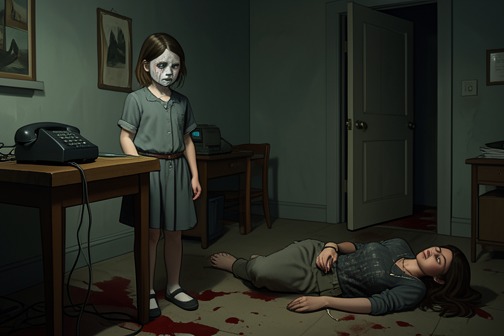
The Attack and Death of Y/N’s Adoptive Mother marks the moment when Y/N’s painful domestic past becomes inseparable from the supernatural mystery surrounding her identity. At sixteen, Y/N has understood herself as a girl rejected and mistreated by the people she calls her parents, yet an involuntary telephone call draws her back toward the old home. There, the opened door, the blood on the floor, the dying woman’s warning, and the necklace left in her hand transform private family trauma into an investigation involving concealed parentage, violence, and forces Y/N does not yet understand.
## The Call and the Return
Without consciously deciding to do so, Y/N calls her mother. The conversation quickly becomes threatening when an unidentified speaker recognizes the woman as Y/N’s mother and asks who she is. The interruption is followed by the mother’s scream, the sound of the telephone and someone falling, and a silence that leaves Y/N without an explanation. Although Y/N reminds herself that her parents abused her for a long time and questions why she should care, she takes the phone and runs out of her room. Her movement is therefore driven by a conflict between remembered injury and an immediate obligation to witness what may have happened.
Y/N travels to the house, thanks the driver, and runs to the entrance. The door has been broken open, providing the first visible sign that the crisis was caused by an intrusion rather than an ordinary family quarrel. Inside, she finds her mother on the ground in a pool of blood. The scene turns the old home from a place associated with abuse into a crime scene and forces Y/N to confront the physical reality of the violence that had begun over the telephone.
## The Mother’s Last Warning
Y/N sits beside her mother and lifts her head, finding her still alive but already close to death. The wounded woman’s speech is broken and difficult to hear: she tells Y/N to stop calling her mother and directs her toward a book in the desk. The instruction is both rejection and disclosure. Even while denying the maternal title, she points Y/N toward an object that may explain the life hidden from her. Y/N briefly recognizes that the woman might survive, but life soon leaves her eyes; she stops moving and speaking, and Y/N can find no pulse. The attack therefore ends not only in death but in an unanswered transfer of knowledge, with the final clue placed inside the same home that had concealed the truth.
## The Necklace and the Discovery of Adoption
After leaving the house and then returning downstairs, Y/N notices that her mother’s body lies in a different position from before. The change reveals that the dying woman had moved or acted during the brief interval, and that she had retained one final object: a necklace in her hand. Y/N picks it up and holds it close, turning the necklace into both a personal remnant of the dead woman and a material clue to the attack. Her grief immediately acquires a purpose as she resolves to discover who was responsible.
The necklace’s significance expands when Y/N later confronts the possibility that the woman was not her biological mother. The revelation strikes at the identity Y/N had been forced to inhabit: she is sixteen, has been abused and rejected within the household, and has already been treated by the vampires as a potential blood vessel rather than as a person. Her question about who her real parents are and why they abandoned her converts the murder investigation into an origin investigation. The dead woman’s final instructions, the necklace, and the concealed record in the desk together establish that Y/N’s family history was deliberately hidden rather than merely forgotten.
## Consequences for Y/N’s Agency
The attack leaves Y/N with no reliable parent, no complete account of her birth, and no clear explanation for the violence. Yet the event also begins a gradual reversal in her position. She is repeatedly exposed to forces that claim authority over her body: a vampire drinks her blood, another calls her the only blood vessel available, and later supernatural dangers injure, examine, or transform bodies around her. Against that pattern of possession, her decision to retrieve the necklace and pursue the truth is an early act of self-directed investigation. The scene does not make her powerful at once; it gives her an unanswered question and an object through which to pursue it.
That question later becomes inseparable from the supernatural conflict. When Y/N chooses to save the trapped vampires rather than prioritize learning who or what her parents are, she places immediate solidarity above personal revelation. Much later, confronting [Gehan](entity:character-recall-character-gehan-fa2d31b153a4), she breaks the chain restraining her with a movement of her arm and asks why he is afraid of his own daughter. The maternal attack thus functions as an early hinge in a larger identity arc: the girl who begins by discovering that her family story has been falsified eventually identifies herself within the very supernatural lineage that made the concealed truth dangerous.
## Narrative Function and Thematic Significance
The attack is presented through Y/N’s restricted experience rather than through an explanation of the attacker, so its immediate meaning is created by fragments: an involuntary call, an unknown voice, a scream, a broken-open door, blood, interrupted speech, and a necklace. This structure makes the event a trauma of witnessing as much as a murder. Y/N cannot prevent the violence, obtain a full account of it, or receive an uncomplicated farewell; instead, she must assemble its significance from sounds, bodily evidence, and objects left behind. The mother’s command to look in the desk and the necklace in her hand turn the scene into a threshold between bereavement and investigation, while the discovery that Y/N was adopted destabilizes the family identity that had organized her suffering. The event also establishes a recurring contrast in the larger narrative between bodies treated as vulnerable resources and bodies that eventually resist control. Y/N is first exposed to blood-drinking, the language of the “blood vessel,” injury, examination, and supernatural restraint, but her later choice to save others, her physical breaking of Gehan’s chain, and her accusation that he fears his own daughter show how the unanswered violence becomes part of a movement toward agency. The mother’s death therefore remains both an ending and an origin: it closes Y/N’s connection to the household that abused her, while opening the hidden lineage, supernatural conflict, and contested inheritance that define her subsequent trajectory.
Event 6
The Discovery of Y/N’s Adoption
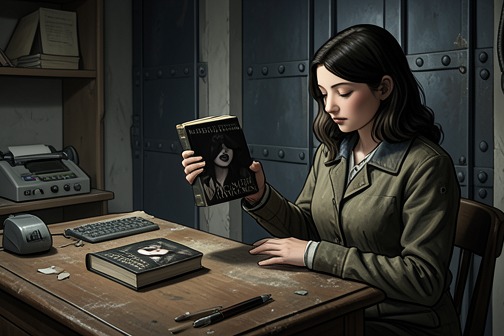
The Discovery of Y/N’s Adoption is the first decisive rupture in Y/N’s belief that the people who raised her are her biological parents. The revelation begins with an apparently private object—a closed book bearing her name—and ends with Y/N confronting the possibility that her entire family history has been concealed from her. Because the evidence comes through a written record preserved by her mother, the event is both a disclosure and a crisis of memory: Y/N does not recover her past directly, but encounters it through an artifact that her adoptive family kept out of ordinary view.
## Discovery of the Book
Y/N is sixteen when she enters her parents’ room, a place she has not been inside for a long time. The room’s desk draws her attention, where she sees a closed book with words on it. The decisive detail is that Y/N’s name stands on the cover. This turns an otherwise unremarkable household object into a personal summons. The book is not merely found; it appears to have been connected to her identity before she understood that identity as incomplete.
Y/N carries the book back to her room and tries to open it, but a lock prevents access. The lock makes the discovery conditional: the truth is present, yet materially withheld. The key is supplied by the necklace her mother gave her. When Y/N examines the necklace, she realizes that it is a key and uses it to unlock the book. The necklace therefore changes status from a familial gift into an instrument of disclosure. Its origin in her mother’s hands also binds affection, secrecy, and access together in the same object.
## The Diary Revelation
Once the book is opened, Y/N reads an entry dated 14 April. The writer describes returning from shopping and finding a small child lying in a basket. There is no note, and the only immediate evidence of the child’s identity is something sewn into the blanket in which the baby is wrapped. That stitched marker is Y/N’s name. The writer records choosing Y/N as the child’s name, establishing that the name was assigned after the discovery rather than necessarily inherited from biological parents.
The entry also states that the writer normally hates children but could not leave the baby outside in the cold. This detail gives the adoption account a concrete circumstance: Y/N was not presented as a child formally entrusted to the household, but as an abandoned infant encountered in danger and taken in. The record supplies no explanation of who left her there or why. It documents the adoptive parents’ first act of care while preserving the absence at the center of Y/N’s origin.
## Y/N’s Immediate Crisis
The meaning of the entry reaches Y/N all at once. She asks whether it means she is not her mother’s daughter, then immediately extends the question to her unknown biological parents: who they are and why they abandoned her. Her response transforms the diary from a family record into an accusation directed at an absent past. The discovery does not provide a complete genealogy or a comforting explanation; it confirms adoption while leaving the motives, identities, and circumstances of the abandonment unresolved.
The emotional force of the event comes from the contrast between Y/N’s former assumption and the diary’s blunt material evidence. She had understood the household as the place of her origin, but the entry relocates that origin to a basket, a blanket, a cold outdoor setting, and an unnamed act of abandonment. The book consequently does more than reveal a legal or biological fact. It destabilizes Y/N’s sense of belonging and makes her own name part of the mystery, since the name was chosen by the person who found her.
A knock from [Jungkook](entity:character-recall-character-jungkook-40c36baa104a) follows the revelation, with him asking whether everything is all right. The interruption places Y/N’s private shock against the continuing life of the household. She has discovered something that changes her relationship to her parents, yet the world outside the room has not visibly changed. This split between ordinary domestic routine and newly exposed secrecy becomes a defining feature of the event.
## Objects, Secrecy, and Identity
The event is organized through a chain of objects: the desk where the book is found, the book’s lock, the necklace that contains the key, and the blanket bearing the name Y/N. Each object carries a different stage of identity. The cover identifies Y/N as the book’s subject; the lock delays knowledge; the necklace grants access; and the sewn name records the moment when an abandoned infant was made legible to the household. Identity is thus shown not as something transparently inherited, but as something stored, locked, named, and passed through material forms.
The book also becomes a counter-record to the family’s visible story. Y/N’s parents’ room represents the household’s authority, while the book preserves a hidden account within that same domestic space. The fact that Y/N must discover and unlock it means that the truth is not volunteered to her. Her knowledge begins through investigation rather than disclosure by a parent. The event therefore establishes secrecy as a force shaping family relations: care may have been real, but it has existed alongside concealment.
## Consequences and Narrative Significance
The adoption discovery changes the central question surrounding Y/N. Before reading the book, she can ask where she belongs only in ordinary familial terms; afterward, she must ask who her real parents are, why she was abandoned, and what significance her name and unknown origin possess. The event opens a narrative path from domestic uncertainty toward a larger investigation of Y/N’s identity. Later supernatural developments make that question increasingly consequential, but the first fracture is entirely human and domestic: a girl finds evidence that the family story she trusted began before she could remember it.
The revelation also foreshadows the book’s recurring concern with memory being controlled by others. Y/N’s past is not available through her own recollection; it survives in a document kept by the people who raised her, and access depends on a key disguised as a necklace. In that arrangement, material objects preserve what personal memory cannot, but they do not automatically explain it. The diary gives Y/N a fact—she was found as a baby in a basket and named by the finder—while withholding the larger truth she most urgently wants.
As a story event, the discovery shifts Y/N from accepted daughter to seeker of origins. It replaces certainty with a double condition: she has evidence that she was cared for, and evidence that she was abandoned. Neither fact cancels the other. The resulting tension gives the revelation its lasting importance, because Y/N’s later struggle for agency begins with learning that even the most intimate details of her identity were decided and preserved by people other than herself.
Event 7
The Green-Eyed Possession Crisis
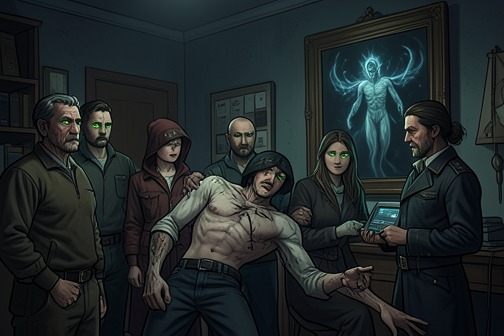
[The Green-Eyed Possession Crisis](entity:event-recall-event-the-green-eyed-possessi-efdbf2a30250) marks the story’s decisive shift from suspicion of individual vampires to recognition of a wider supernatural invasion. What first appears to be strange behavior inside the castle is revealed as bodily possession: beings from another world, unable to cross into this one through the ordinary gate, enter vampire bodies while their hosts sleep. The crisis makes the vampire household unstable from within and forces Y/N to navigate a danger that cannot be identified by appearance alone.
## Causes and Background
[J-Hope](entity:character-recall-character-j-hope-4d72d56c93de) gives Y/N the first clear explanation after asking whether the threatening figure had green eyes. He describes a neighboring world populated by beings similar to the vampires, explains that they cannot pass through the gate, and says that they sometimes take over the vampires’ bodies while the vampires sleep. This account establishes both the practical cause of the crisis and its central uncertainty: a familiar body may no longer belong to the person Y/N recognizes.
J-Hope’s warning also creates a rule for survival. If someone with green eyes asks Y/N questions, Y/N must claim to be lost or merely walking through the woods and must reveal nothing about the vampires. J-Hope directs Y/N to [RM](entity:character-recall-character-rm-98a96fb2734b) for more information because RM knows the most about the phenomenon, but the attempted transfer of knowledge immediately becomes dangerous. When RM suddenly rises from what looked like sleep, his eyes glow green, and he invites Y/N to come closer. The scene turns the explanation into an immediate test: the suspected invasion is no longer distant or theoretical, but present in the room with Y/N.
## The Crisis Becomes Visible
The danger intensifies when Y/N wakes at night to find the door open and the hallway illuminated. Someone opens the way, and Y/N sees bodies lying across the floor before recognizing the figures. The apparent corpses then rise and open their eyes, every pair glowing green. This transformation converts possession into a collective spectacle: the threat is not confined to RM, and the bodies of the vampires have become a concealed battlefield between their own identities and the entities using them. When Y/N enters the living room, the others are there as well, also displaying green eyes, while an unidentified voice asks whether Y/N has been brought in and receives confirmation. The exchange suggests coordination rather than isolated attack, and the household’s familiar gathering place becomes the scene of an organized capture.
## Capture, Entrapment, and Bodily Uncertainty
The possession crisis also extends beyond the initial revelation that the vampires can be occupied. When the shadow holding Y/N’s wrist pulls Y/N into a mirror, the mirror feels like water and becomes a passage into confinement. The abduction therefore links bodily possession with unstable boundaries between worlds: the invaders do not merely hide inside familiar bodies, but also control routes through reflective surfaces and use those routes to remove Y/N from ordinary protection. The danger remains physical throughout the episode. In the other world, Y/N feels a sharp pain in the leg and discovers an enormous water snake or similar creature, making the unfamiliar environment itself another instrument of capture. Later evidence of the violence surrounding the vampires is disguised in the human world when an examination finds various holes in Y/N’s body and [Jin](entity:character-recall-character-jin-962fbeb69b78) explains them away as injuries caused by their cat, with [Suga](entity:character-recall-character-suga-27f45cc854e4) supporting the false explanation. The cover story shows how possession and vampiric feeding force the characters to conceal bodily damage even when medical scrutiny threatens to expose what happened.
## Consequences and Narrative Significance
The crisis changes the meaning of recognition throughout the surrounding story. Y/N has already experienced betrayal when a vampire drinks Y/N’s blood despite the expectation of trust, and the green-eyed invasion gives that betrayal a larger structure: danger can arrive through an apparently familiar face, a sleeping body, or an ordinary domestic space. The crisis therefore converts distrust from a reaction to one violent encounter into a necessary method of survival. Even the vampires’ attempts to protect their secret become compromised, since their bodies can be used by hostile beings while their true selves are absent or powerless.
The possession plot also repeats a wider pattern of displacement in Y/N’s life. Y/N’s mother abandons Y/N by driving away immediately after leaving Y/N outside, J-Hope later finds Y/N after Y/N runs away, and the vampires’ conflict removes Y/N from the human world through the mirror. Each movement begins as an escape or separation but leads into another form of dependence and danger. The mirror passage makes that pattern literal: Y/N is not simply taken to another place, but pulled through a boundary that feels fluid and offers no secure distinction between refuge and trap.
Its consequences extend into the vampires’ efforts to preserve an ordinary collective life. A later view of [BTS](entity:organization-recall-organization-bts-f5f93ce03094) shifts abruptly to domestic quarrelling over a cookie, a mundane exchange that contrasts with the violence, secrecy, and bodily instability surrounding them. The contrast does not erase the invasion; it shows what the characters are trying to protect when they continue behaving as a household. Their familiar routines exist beside possession, concealment, and supernatural pursuit, so normality becomes an activity repeatedly reconstructed rather than a stable condition.
The possession crisis is ultimately part of a chain in which bodies, memories, and identities remain vulnerable to outside control. Y/N is pulled into the mirror, injured by a water snake, and later encounters Jin with normal eyes who trembles at the blood covering his hands, while Y/N’s mother responds to the final supernatural confrontation by placing a hand on Y/N’s forehead and asking Y/N to close their eyes. These moments connect invasion with aftermath: the body records what the mind or surrounding relationships may attempt to conceal, and apparent restoration does not guarantee that the experience will remain fully remembered. The event’s decisive narrative function is thus to make identity itself a contested territory, preparing the story for later struggles over revelation, transformation, and the deliberate rewriting of memory.
Event 8
Y/N’s First Passage Through the Mirror

Y/N’s First Passage Through the Mirror marks the story’s first unmistakable crossing from an oppressive but recognizable environment into an entirely alien world. A key, a dark room, [Jin](entity:character-recall-character-jin-962fbeb69b78)’s coercive presence, and a mirror that feels like water form the sequence’s material chain: an apparently ordinary object becomes a passage, and Y/N’s movement through it is not an act of free exploration but an enforced abduction. The event changes the central danger from confinement within a castle-like setting to exposure to an unknown realm governed by unfamiliar beings and powers.
## The Key and the Dark Threshold
A strange bird first supplies the practical means of entry. It illuminates only a small portion of the room, flies toward Y/N, gestures for the hands to be shown, and drops a key into them. Y/N recognizes it as the same key possessed after waking several days earlier, linking the present doorway to an earlier mystery and making the object more than a random tool. The bird’s apparently normal eyes briefly reassure Y/N, who decides that it is safe enough to proceed.
Y/N places the key in the door and opens it, but the room beyond offers no reassuring revelation. Unlike the bird and the doorway, it does not glow; it is completely black. The darkness therefore functions as a threshold before the mirror appears. The key promises agency because Y/N physically uses it, yet the opened room immediately undermines that promise by withholding visibility and control. The passage begins with apparent choice but is structured toward entrapment.
## Jin’s Coercion and the Mirror Crossing
Inside the darkness, someone snaps his fingers, and Y/N feels as though the soul has left the body. The supernatural gesture suspends ordinary bodily autonomy before Jin is even clearly encountered. When Jin grabs Y/N’s wrist, a candle comes on, providing only enough light to reveal the immediate danger. Jin reaches for the door, takes the candle with him, and commands Y/N to come. Y/N enters the room without being able to stop the movement, after which Jin closes the door behind them and remarks on their proximity to something unspecified.
The scene’s decisive reversal occurs when Jin’s body suddenly falls to the ground while a shadow remains standing and continues to hold Y/N’s wrist. The separation between Jin’s body and the force acting through or around him makes possession and bodily displacement central to the crossing. The shadow pulls Y/N into the mirror, whose surface feels like water. This tactile comparison presents the mirror not as a reflective boundary but as a permeable medium. Once drawn through it, Y/N is literally inside the mirror, and the familiar distinction between room, surface, and world has collapsed.
## Arrival in the New World
The crossing ends not with safety but with a declaration of replacement: an unidentified figure welcomes Y/N to a new world and throws Y/N out in front of him, outside a bubble. The language of a new world frames the passage as a forced relocation rather than a temporary vision. Y/N begins to scream and thinks that death is imminent, showing that the emotional value of the crossing shifts sharply from uncertain investigation to immediate mortal danger.
The threat is then made bodily. Giant claws suddenly close around Y/N’s body, interrupting the fall and establishing that the new realm contains creatures capable of seizing Y/N with overwhelming physical force. A bird slowly descends and sets Y/N on the ground, after which the figure seated above can finally be seen. He introduces himself as [Jackson](entity:character-recall-character-jackson-aa079ef98c23). His arrival gives the strange world a named inhabitant, but it does not undo the violence of the transition: Y/N has entered the realm through coercion, been thrown into it, and survived only because another creature intervened.
## Consequences for the Wider Conflict
This first mirror passage establishes the operational logic later associated with the Mirror World and [Mirror Portals](entity:concept-recall-concept-mirror-portals-861e9ce37e46). Access depends on a distinctive object, a locked or concealed threshold, and a mirror whose surface can be crossed; passage can also be imposed on a person who lacks the ability to resist. The event consequently turns the mirror into an instrument that can separate Y/N from allies, expose Y/N to unfamiliar predators, and transfer control of the narrative from the visible castle environment to a hidden supernatural domain.
The later plot confirms that the crossing is connected to a much larger struggle involving [Gehenna](entity:location-recall-location-gehenna-80ca2c7bc5c2), which [Bambam](entity:character-recall-character-bambam-fc7694a2002a) identifies as ruled by [Gehan](entity:character-recall-character-gehan-fa2d31b153a4) and which [Jinyoung](entity:character-recall-character-jinyoung-1aab582dd2c6) explains is what humans call Hell. The blood-red moon later falls over Y/N, and Y/N eventually concentrates on making the gates of Hell appear before pushing Gehan away. These later images do not belong to the initial crossing itself, but they enlarge its significance: the first movement through the mirror is the opening threshold of a conflict that will involve blood, supernatural authority, imprisonment, possession, and the attempted sealing of an infernal realm.
## Narrative Significance
The event also anticipates Y/N’s broader transformation from a person repeatedly moved by others into someone able to direct supernatural force. Earlier, Y/N is abandoned when the mother closes the car door and drives away, and later [J-Hope](entity:character-recall-character-j-hope-4d72d56c93de) finds Y/N after the decision to run away. In the mirror sequence, Jin and the shadow determine Y/N’s movement, while the claws and the bird determine whether Y/N falls or survives. These repetitions make enforced movement a defining early condition of Y/N’s story.
That pattern eventually changes. During the confrontation with Gehan, Y/N takes a glass ball from one of his pockets, pushes him away, and imagines the gates of Hell into existence. Y/N’s power is later described by [Assiah](entity:character-recall-character-assiah-286c5e1e8c00) as possession by Y/N’s own power, and the three aspects of Y/N join hands in a triangle to concentrate their effort. Assiah then sends Y/N to a new home and makes the group slowly disappear, while removing a mark of Gehan’s curse from Bambam. Read against those later developments, the first mirror passage is an inverted initiation: Y/N initially crosses a supernatural boundary as a captive, but the same narrative of thresholds eventually leads toward self-directed power, resistance, and the reorganization of identity.
Event 9
Jin’s Capture in the Other World
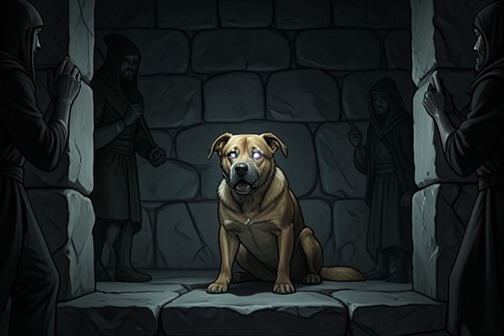
[Jin’s Capture in the Other World](entity:event-recall-event-jin-s-capture-in-the-ot-a1cfd436fad6) is the decisive separation at the center of the mirror-world rescue arc. As pursuers close in, [Jin](entity:character-recall-character-jin-962fbeb69b78) pushes Y/N through the mirror to preserve her safety, but the passage breaks before he can follow. Alone on the other side, he hides in dog form, is discovered and threatened by the world’s inhabitants, and is eventually located in a stone enclosure that resembles a prison. The event transforms Jin from rescuer into captive and makes his later use of his own power to imprison the other seven figures a continuation of the same protective sacrifice.
## Causes and Background
The capture grows out of the unstable relationship between the human world and the mirror passage. Y/N has already been abandoned in an unfamiliar place when her mother drives away, creating the first rupture between Y/N and ordinary human protection. Later, the discovery of a locked book, opened with a key and beginning with a dated entry, establishes written records as another route into concealed histories. The mirror then becomes a literal threshold: it can return a person to a room, but it can also pull someone inside and separate companions from one another.
Jin and Y/N reach the mirror while unidentified pursuers are searching for them. Jin tells Y/N to enter and swim to the other side, and when the danger approaches he pushes her through the surface himself. The action is protective but also strategically irreversible. Y/N crosses; Jin remains exposed. The mirror is not simply a doorway in this sequence but a contested object whose opening determines who can escape, who must wait, and who can be cut off.
## The Capture Beyond the Mirror
After Y/N has entered, a giant stone is thrown against the mirror and breaks it into pieces. Jin recognizes that Y/N is at least safe, then changes into his dog form and searches urgently for somewhere to hide. He finds a small cave and remains there in silence, but the quiet becomes a warning rather than protection. A hand suddenly grabs him by the neck fur, and his barking and growling reveal his presence.
The people who find him do not treat the animal form as harmless. One calls him a little monster, another identifies him as a dog, and one of them stares directly at him before threatening that he will pay for what happened. The scene therefore combines physical capture with hostile interpretation: Jin is vulnerable because his transformation conceals his identity, yet the captors still perceive him as an abnormal and punishable creature. His power to change form offers temporary concealment, not freedom.
The consequences become visible when Y/N and the others later investigate a small cave that looks more like a stone prison. A faint human outline appears inside, and the group realizes that the prisoner is Jin. When the stone pillars come down again, [Jungkook](entity:character-recall-character-jungkook-40c36baa104a) helps [Jimin](entity:character-recall-character-jimin-f9655c4e2151) and [RM](entity:character-recall-character-rm-98a96fb2734b), while Jin slowly makes his way outside. Y/N immediately hugs him and apologizes. His release is thus framed not as a clean victory but as the physical restoration of a relationship interrupted by the mirror’s collapse and the captors’ violence.
## Protection, Power, and Sacrifice
Jin’s conduct gives the event its ethical structure. He does not enter the mirror first and leave Y/N to chance; he orders her toward safety and physically pushes her through when pursuit becomes imminent. The broken mirror then makes the cost of that decision plain. His separation is not an accidental pause in the journey but the consequence of choosing Y/N’s survival over his own escape.
Jin later explains that he sacrificed his power to lock the other seven figures inside the mirror. The same pattern of self-expenditure governs both moments: power is used to shield others, and the protector becomes the person who bears the confinement. Because the others are badly wounded, he also uses what remains of his power to make them forget that the other people ever existed. His actions contain the threat, but they do so through enforced absence and memory loss rather than through a simple defeat.
## Aftermath and Memory
The rescue does not restore an uncomplicated reality. Jin’s imprisonment is followed by repeated disturbances involving mirrors, altered spaces, and uncertain returns. Y/N briefly reappears in her room after the mirror disappears, only to find V beside her, demonstrating how quickly a threshold experience can be converted into an apparently ordinary scene. Later, the room turns white again and returns Y/N to a place with four mirrors, suggesting that the passage remains active even when its visible form changes.
Memory becomes the principal aftermath of the capture and the larger supernatural conflict. [Assiah](entity:character-recall-character-assiah-286c5e1e8c00) eventually states that she erased Y/N’s memory, and later asks the group to stand together before making them slowly disappear. Jin’s earlier decision to erase knowledge of the other inhabitants therefore anticipates a broader regime of controlled remembering. The story repeatedly makes safety depend on forgetting: people are removed from ordinary knowledge, witnesses lose access to what happened, and the characters must recover meaning through objects, spaces, and partial recollections.
## Narrative Significance
Jin’s Capture in the Other World gives the mirror-world plot its clearest value reversal. A passage expected to provide escape becomes a trap; Jin’s act of rescue produces his own exposure; animal transformation provides concealment but ends in discovery; and reunion arrives only after imprisonment has revealed the price of protection. The event also establishes that the mirror’s danger is material rather than merely symbolic: it can be entered, broken, crossed, and used as a prison.
The event’s lasting importance lies in the connection between bodily captivity and narrative captivity. Jin is held in stone, while the truth of the encounter is later held back by supernatural power and memory erasure. His eventual emergence and embrace with Y/N preserve the personal bond that the mirror tried to sever, but the surrounding changes show that rescue does not end the threat. Jin’s capture remains the moment when protection, confinement, sacrifice, and the politics of memory become inseparable.
Event 10
The Rescue Expedition for Jin
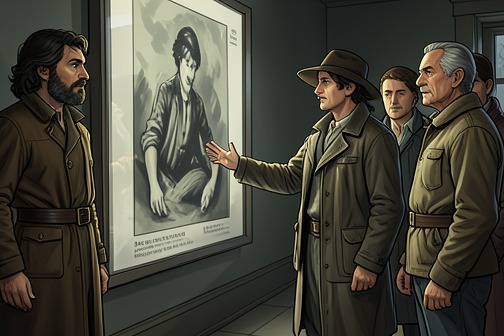
[The Rescue Expedition for Jin](entity:event-recall-event-the-rescue-expedition-f-aafc6441ccff) is the mission through the mirror undertaken by Y/N and the vampires after [Jin](entity:character-recall-character-jin-962fbeb69b78) is lost in the other world. Its decisive significance lies in the change from accidental passage to purposeful return: the mirror remains dangerous and unpredictable, but the group begins to treat it as a route that can be examined, entered, and used to recover one of their own. The expedition therefore joins a rescue plot with a larger struggle over thresholds, separation, and the possibility of bringing someone back from an alien space.
## Causes and Preparation
The expedition begins with uncertainty about the mirror and the memory of Y/N’s earlier passage through it. [Jimin](entity:character-recall-character-jimin-f9655c4e2151) is curious about the object, while [Jungkook](entity:character-recall-character-jungkook-40c36baa104a) explains that the group has already tried several things without success. Rather than possessing a reliable method, the vampires approach the mirror through experiment and questioning, asking Y/N what crossing it had felt like. Y/N recalls that it was like water, a detail that supplies the first practical description of the portal and gives the others a model for what they may encounter.
The investigation becomes physical when V walks to the mirror and places his hand inside it. His hand passes through, confirming that the surface is not merely reflective or symbolic but permeable. This test converts Y/N’s recollection into shared evidence. The group then gathers in front of the mirror with a bag apparently containing food and drinks, preparing to enter together. [J-Hope](entity:character-recall-character-j-hope-4d72d56c93de) reduces the proposed method to the image of going through and swimming, while Y/N confirms it. The mixture of casual provisions and an impossible doorway captures the expedition’s unstable character: the group plans as if for a journey, but it is entering a place whose rules remain only partially understood.
## Crossing and Separation
The passage begins as a collective action, but it immediately threatens the group’s unity. Jimin and Jungkook move at the front, with [Suga](entity:character-recall-character-suga-27f45cc854e4) and [RM](entity:character-recall-character-rm-98a96fb2734b) behind them, while the others follow. Then Jimin suddenly disappears. Jungkook calls for him, and Y/N rushes toward the place where he vanished, only to fall. The rescue party consequently experiences the same danger it is attempting to overcome: the mirror does not preserve ordinary formation, distance, or mutual visibility. A mission intended to retrieve Jin reproduces the condition of disappearance within the rescuers themselves.
The other world is populated by beings that make the expedition more than a search. A giant bird lands nearby, and [Jackson](entity:character-recall-character-jackson-aa079ef98c23) observes the unfamiliar animals with curiosity before recognizing that V is growling and that the newcomers are not friendly. The exchange establishes a hostile encounter without turning the animals into a simple background detail. The vampires are themselves perceived as strange intruders, while their reaction marks the other world as a place where ordinary assumptions about animal behavior and social boundaries cannot be trusted.
The most immediate physical threat is the giant water snake, which Y/N recognizes from an earlier encounter. When J-Hope notices the enormous creature and Y/N looks underwater, the snake appears again, prompting Y/N to insist that they must leave at once. V’s question about why they should flee shows that the danger is not initially shared as knowledge; Y/N’s prior experience gives the warning its urgency. The snake thus functions as a recurring obstacle and as evidence that the expedition has entered a space governed by repeated, unresolved threats rather than a neutral landscape.
## Discovery of Jin
The search eventually leads to a small cave that resembles a stone prison. The setting gives physical form to Jin’s absence: he is not simply missing but confined within a constructed enclosure. A small human outline becomes visible, and the group recognizes him together. Their collective identification, expressed in the cry that he is Jin, marks the turning point from uncertain pursuit to confirmed discovery.
The recovery is difficult even after Jin has been found. Several pillars collapse again, and Jin only slowly makes his way outside. Jungkook assists Jimin and RM before helping with the aftermath, while Y/N embraces Jin immediately and apologizes. The embrace restores personal contact after the mirror’s repeated acts of separation, but the apology also acknowledges that rescue has not erased the danger endured by the missing vampire. Jin’s release is therefore presented as a fragile extraction from confinement rather than a clean, effortless victory.
## Consequences and Significance
The expedition changes the group’s relationship to the mirror. At first, the mirror is an object whose behavior must be remembered, questioned, and tested; by the time the group stands before it with supplies, it has become a possible route for coordinated action. Yet the disappearance of Jimin and Y/N’s fall demonstrate that deliberate entry does not equal control. The portal permits pursuit and recovery while continuing to fragment the travelers who rely on it.
Jin’s rescue also reinforces the group’s collective identity. The vampires cross a dangerous boundary for an absent companion, endure unfamiliar creatures and the returning water snake, and continue searching until they find him in the stone enclosure. The recovery depends on shared recognition and physical assistance rather than on a single heroic act: Y/N identifies and embraces Jin, Jungkook helps the others and supports the escape, and the whole party participates in the discovery. In this structure, rescue is both a practical objective and a test of whether separation can be reversed through solidarity.
The event also foreshadows the broader pattern of the story, in which mirrors, disappearances, prisons, and returns repeatedly overlap. Y/N was once pulled inside the mirror by a shadow when Jin’s body fell away, making the threshold a site of possession and helplessness. During this expedition, the same threshold is approached consciously, yet it still produces sudden vanishing and collapse. The contrast gives the rescue its lasting narrative weight: the other world cannot be mastered simply by naming its entrance, but the act of returning for Jin proves that fear of the passage does not have to end in abandonment.
Event 11
Y/N’s Poisoning and Coma

Y/N’s Poisoning and [Coma](entity:state-recall-state-coma-c9fd4d76e48c) is the immediate consequence of Y/N’s attempted survival in the mirror realm, where a water snake bites her leg and injects poison. The event converts an already unstable passage between worlds into a crisis of bodily vulnerability: Y/N loses control of perception, collapses into a coma, and later discovers that four days have passed. Her survival depends on [Jin](entity:character-recall-character-jin-962fbeb69b78)’s search for a remedy, while the aftermath forces the group to confront both the limits of their knowledge and the powers operating around them.
## Causes and Background
The poisoning occurs inside the mirror after a shadow pulls Y/N through it. The surface feels like water, and Y/N finds herself trapped in an unfamiliar realm rather than merely looking through an ordinary reflection. When she tries to continue moving, an enormous water snake attacks. Its fangs sink deeply into her leg, making the injury more than a warning or superficial wound. Y/N recognizes the danger as poison, but the recognition comes only after the venom has entered her body.
The scene combines escape, pursuit, and forced passage. Y/N has already chosen movement over remaining where she believes death is certain, yet the new environment offers no safe refuge. The snake’s bite turns that decision into a bodily ordeal: the mirror realm does not simply conceal threats, but produces a form of danger that continues to affect Y/N after she leaves it. Her body becomes the point at which the two worlds remain connected.
## Course of the Crisis
After the bite, Y/N begins to feel strange. The surroundings spin, forms become distorted, and her eyes grow heavier with every moment. The sequence is narrated through bodily disorientation rather than a full explanation of the venom’s nature. Perception fails before consciousness does, leaving Y/N unable to assess the realm, find safety, or control what happens next.
The poison’s effects become visible later, when the whole room begins to twist around Y/N. She questions why the room is acting strangely, but [RM](entity:character-recall-character-rm-98a96fb2734b) sees nothing abnormal and responds that it is just as before. The disagreement establishes the crisis as both physical and isolating: the others occupy the same space, yet only Y/N experiences its distortion. Jin identifies the cause, saying that the poison’s work is beginning, and the people around her slowly fade from view.
Y/N reaches toward a light with her last remaining strength before everything turns white. When she opens her eyes again, she sees a ceiling that does not belong to the house. The blank transition from the spinning room to the unfamiliar ceiling preserves the break in consciousness while also suggesting a passage from supernatural danger into medical uncertainty.
## Coma and Treatment
Y/N wakes in a clinical room where a man in a white coat warns that she may still be unstable, though he permits Jin and the others to take her home carefully. The medical setting confirms that the bite has consequences beyond the immediate mirror episode. Y/N does not understand where she is or what has happened, and the adults around her possess information about her condition that she lacks.
The most decisive temporal revelation comes from [J-Hope](entity:character-recall-character-j-hope-4d72d56c93de): Y/N has been in a coma for about four days. For Y/N, the interval felt like five minutes or less, so the poisoning disrupts not only her body but also her experience of time. The contrast turns recovery into a form of belated discovery. She has not simply slept through an ordinary night; she has lost several days while the others waited, searched, and managed the aftermath without her conscious participation.
Y/N’s first practical question is how she is alive after being poisoned. Jin explains that, once they returned, he immediately searched for the poison and gave the treatment to her in the hope that it would save her. The recovery therefore depends on Jin’s initiative and on knowledge that had to be sought after the attack, not on an effortless supernatural cure. V helps Y/N stand by placing her arm around his shoulder, making the return home an act of physical assistance as well as emotional reassurance.
## Consequences and Aftermath
The coma interrupts Y/N’s continuity with the group and leaves her dependent on others when she wakes. The scene does not present survival as a complete restoration: the white-coated man says that she may still be unstable, and Y/N remains confused about the location, the poison, and the missing time. Her body has crossed back from the mirror, but her understanding has not caught up with it.
The event also enlarges the story’s recurring pattern of captivity and altered consciousness. Y/N is abandoned by her mother, encounters J-Hope after running away, discovers her mother dead, enters the mirror, and later loses consciousness through poisoning. Each transition places her in a new condition before she can fully understand the previous one. The water-snake bite is distinctive because it makes the danger measurable through injury and delayed physiological effects, while the four-day coma creates a literal gap in the narrative of her life.
The poisoning’s implications extend beyond Y/N’s immediate recovery. Later revelations establish that the vampires possess powers and that Jin can sacrifice his power to imprison others in a mirror and make the surviving group forget what happened. In that broader context, Y/N’s coma belongs to a world where bodies, memories, and access to reality can all be controlled or rewritten. Her lost time consequently anticipates the story’s larger concern with who has the authority to preserve experience, conceal it, or erase it.
## Narrative Significance
As an event, Y/N’s Poisoning and Coma functions as a threshold between supernatural adventure and enforced vulnerability. The mirror initially operates as a passage, but the bite proves that passage has a cost: entering another world exposes Y/N to physical laws and predators that remain dangerous even when the scene changes. The poison converts movement into suspension, and the coma temporarily removes Y/N from the plot she is trying to survive.
The event is also structured around belated knowledge. Y/N identifies the poison while its effects are beginning, yet she cannot prevent the collapse; she learns the duration of her coma only after waking; and she learns how she survived only when Jin explains the treatment. Information arrives after the body has already suffered. That delayed pattern gives the event its particular force: the crisis is not solved by understanding it in time, but reconstructed afterward through the testimony and care of others.
Finally, the episode establishes survival as collective rather than solitary. Y/N’s decision to keep running cannot save her from the snake, but Jin’s search for a remedy and V’s support during her first steps allow her to return. The coma therefore marks both a defeat of individual escape and a temporary restoration through the group, while leaving Y/N physically and temporally altered by what happened in the mirror.
Event 12
The Revelation of the Green-Eyed Vampires’ Origin
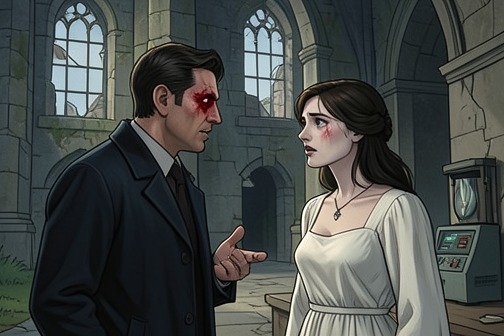
[The Revelation of the Green-Eyed Vampires’ Origin](entity:event-recall-event-the-revelation-of-the-g-3985029f5162) is the pivotal historical disclosure that explains the seven green-eyed vampires’ presence in the mirror and the unnatural silence surrounding them. [Jin](entity:character-recall-character-jin-962fbeb69b78) tells Y/N that the prisoners were once part of the same vampire community as the castle’s remaining inhabitants, but their refusal to accept a ban on hunting humans led to mass murder, insanity, imprisonment, and the destruction of memory. The event changes the story’s central mystery from a question of appearance to a question of buried history: the green eyes mark not an unexplained difference, but the visible aftermath of a violent split within the vampire world.
## The Question Behind the Mirror
The revelation begins when Y/N asks Jin why the others are locked away. Jin warns that the explanation will take time, framing the scene as a deliberate act of testimony rather than a casual answer. By this point, Y/N already knows that the prisoners are vampires and that they differ from the others through their green eyes. Jin’s account supplies the missing connection between those visible signs and the castle’s concealed past.
The conversation also reverses the position of knowledge between the characters. Y/N, who entered the castle as a human outsider and was repeatedly forced to interpret unfamiliar beings and spaces, becomes the person demanding an explanation. Jin, by contrast, becomes the keeper of a history that the other inhabitants no longer possess. His hesitation and sigh suggest the burden of recounting an episode that was not merely witnessed but actively suppressed.
## A Community Divided by Hunger
Jin explains that the seven green-eyed vampires once lived alongside him and many other vampires. The community eventually decided to stop attacking humans for blood, fearing that continued hunting would provoke people to pursue and destroy them. The decision established a collective rule intended to preserve the vampires’ survival, but the seven could not accept the restraint. They wanted to leave the castle and hunt again.
The conflict therefore begins as a dispute over appetite, law, and communal security. The seven are not introduced as outsiders who arrived from an unrelated realm; they emerge from the same society as Jin and the others. Their difference is created through conduct and allegiance before it is expressed through the green-eyed condition. When the community prevents them from hunting, the seven initially agree to remain inside and stop attempting to leave. That apparent settlement becomes a deceptive calm rather than a genuine reconciliation.
## The Disappearance and the Massacre
After the seven stop trying to go out, the other inhabitants of the house begin disappearing one by one. Jin and the remaining vampires search for them and eventually discover the missing members in the room of the others, all dead. The victims had been drained completely by the seven. This discovery reveals that the prisoners’ violence did not end with their confinement; they redirected their hunger inward, turning the vampire community itself into their source of blood.
Jin identifies a further consequence of drinking from another vampire: it drives the drinker insane. The massacre thus functions both as murder and as a mechanism of corruption. The seven’s attempt to satisfy their hunger destroys the people around them while intensifying the condition that makes them dangerous. Their green-eyed identity is consequently associated with a cycle in which appetite produces violence, violence produces insanity, and insanity makes communal control increasingly difficult.
The survivors try to stop them but fail. Their failure is important because it removes the possibility of an ordinary physical solution. The seven cannot simply be persuaded back into the community, and the remaining vampires lack the power to defeat them by force. The crisis demands an irreversible act from Jin.
## Jin’s Sacrifice and the Mirror Prison
Jin says that the only way he could stop the seven was to sacrifice his own power. His account establishes that the confinement was not created by an impersonal property of the mirror; it was the direct result of Jin’s intervention. By giving up his power, he caused the seven vampires to become locked inside the mirror, transforming the reflective surface into a prison and converting personal sacrifice into communal protection.
The act also leaves Jin diminished. Y/N’s question about his powers exposes that the castle’s apparent order rests on a cost paid by one of its members. Jin further explains that the seven each possess a power, although the only one he knew for certain was something like hypnosis. The imprisonment therefore contains not merely violent bodies but supernatural abilities that could have made their return even more dangerous.
Jin used what remained of his power to make the wounded survivors forget that the other people had ever existed. The memory erasure concealed both the massacre and the existence of the prisoners. It protected the survivors from the knowledge of what had happened, but it also removed their ability to understand the castle’s history. The mirror thus becomes a repository for two forms of imprisonment: the seven are confined physically, while the others are confined within an imposed absence of memory.
## Consequences and Narrative Significance
The revelation recasts the green-eyed vampires as the consequence of a failed social order. They were once members of the same community, subject to the same dangers and capable of living under the same rules, but their refusal to abandon human hunting turned a protective policy into a civil conflict. The story’s opposition between the castle vampires and the green-eyed prisoners is therefore also an opposition between restraint and predation, remembered history and enforced forgetting, and collective survival and individual appetite.
The disclosure also gives Jin a morally complicated role. He is protector, survivor, and architect of the silence that followed the massacre. His sacrifice prevents further killing, yet his manipulation of memory means that safety is purchased through the removal of truth. Y/N’s request for an explanation begins the recovery of that truth, making the scene a form of historical restoration: the sealed past becomes speakable, and the mirror’s mystery acquires a concrete origin.
Later events continue to expose how unstable that containment is. Y/N is pulled inside the mirror by a shadow, experiencing the boundary between prison and passage as something fluid rather than secure. Much later, [Gehan](entity:character-recall-character-gehan-fa2d31b153a4) is identified as the ruler of [Gehenna](entity:location-recall-location-gehenna-80ca2c7bc5c2), and under a blood-red moon Y/N pushes him away and imagines the gates of hell into existence. Her mother then appears from a blue bubble, while [Assiah](entity:character-recall-character-assiah-286c5e1e8c00) explains that Y/N had been possessed by her own power; [Bambam](entity:character-recall-character-bambam-fc7694a2002a) bears Gehan’s mark after suffering a hole through his chest while trying to stop Y/N. These later revelations widen the scale of the earlier history, connecting the mirror prisoners’ origin to a broader network of possession, curses, supernatural power, and contested memory. The account Jin gives remains decisive because it is the first explanation that turns the green-eyed vampires from an enigmatic threat into the surviving evidence of a catastrophe that the castle tried to forget.
Event 13
The Shadow’s Attack on Y/N
The Shadow’s Attack on Y/N is a supernatural assault that converts an apparently empty space into a trap. An unseen presence calls Y/N by name, drops Y/N through a black hole, manipulates the apparent deaths of the vampires, and then tries to persuade Y/N to leave them behind. Its decisive significance lies in the way it attacks perception as much as the body: the threat does not merely pursue Y/N, but attempts to redefine which reality, and which relationships, can be trusted.
## The Unseen Summons and Descent
The attack begins with an absence. Y/N calls out into the emptiness, but the response comes from an unidentified voice repeating Y/N’s name. Before Y/N can establish who is speaking, a black hole appears beneath Y/N, and Y/N falls into it screaming. The sudden opening makes the environment itself hostile; there is no visible attacker to confront, only a voice and a rupture in the ground that remove Y/N from safety.
The event’s first movement therefore depends on concealment and disorientation. The shadow remains undefined while exercising immediate power over Y/N’s location. The black hole functions as both physical abduction and narrative threshold, carrying Y/N into a space where ordinary evidence can no longer be trusted and where the attacker controls what Y/N sees.
## The Apparent Death of the Vampires
After the descent, Y/N finds [Suga](entity:character-recall-character-suga-27f45cc854e4) and the other vampires unable to respond. The unidentified figure says that they are sleeping forever, then handles [Jin](entity:character-recall-character-jin-962fbeb69b78)’s body with deliberate cruelty, pulling Jin by the hair, forcing Jin’s eyes open, and displaying an eyeball before dropping Jin as though it were a toy. This grotesque performance turns the vampires’ vulnerability into a spectacle designed specifically for Y/N to witness.
The attack then escalates from a single disturbing image into an attempted capture. A command is given to grab Y/N, and Y/N runs while the pursuers follow. Exhaustion eventually stops the escape. A giant fire appears behind Y/N, and the bodies of Suga, [J-Hope](entity:character-recall-character-j-hope-4d72d56c93de), V, Jin, [RM](entity:character-recall-character-rm-98a96fb2734b), [Jimin](entity:character-recall-character-jimin-f9655c4e2151), and [Jungkook](entity:character-recall-character-jungkook-40c36baa104a) are shown trapped within it. The image appears to confirm that the people Y/N is trying to save have been destroyed, placing Y/N between flight and helpless witness.
The threat’s words complicate the vision rather than simply confirming a death. The figure explains that the vampires are still alive inside those bodies, even though Y/N has seen them as corpses and watched them fall with the fire into a hole. The apparent deaths are thus presented as a controlled revelation: the shadow wants Y/N to understand enough to panic, while retaining the authority to decide what “alive” means and where the vampires have gone.
## Manipulation, Isolation, and the Attempted Abduction
Once the vision has established fear, the shadow changes tactics. A figure appears, but when Y/N points toward him, Suga and Jimin do not perceive the same presence. Y/N insists that he is there, while the others effectively deny the evidence before them. This disagreement isolates Y/N from the group and makes personal testimony the only available proof of the attacker.
The figure warns that the vampires will end up as Y/N saw them earlier if Y/N remains in the space. It orders Y/N to go away and declares that Y/N does not belong with them. The assault consequently targets identity and attachment as directly as it targets survival. The shadow presents separation as protection, suggesting that Y/N’s presence is the cause of the vampires’ danger and that abandonment is the only way to prevent another catastrophe.
Y/N attempts to block out the voice, but the effort fails. The figure continues with an invitation to come away and leave together. This invitation reveals the coercive structure beneath the threat: the shadow seeks not merely to frighten Y/N into running, but to make Y/N choose the attacker’s direction. The language of companionship masks an abduction attempt, turning the command to escape into an offer of false refuge.
## Relation to Y/N’s Repeated Perils
The episode belongs to a wider pattern of abandonment, pursuit, and forced passage. Earlier, Y/N’s mother tells Y/N to leave the car, closes the door, and drives away, leaving Y/N stranded and pleading for her return. Later, J-Hope finds Y/N after Y/N has run away and asks why Y/N fled. These moments establish that separation repeatedly begins with uncertainty over who is leaving whom: Y/N is abandoned by a parent, seeks distance from danger, and is then pursued by a figure who claims to offer escape.
The shadow’s attack also echoes the book’s use of thresholds. Y/N is pulled inside a mirror by a shadow while Jin’s body drops away, and the mirror feels like water as Y/N enters it. In the later attack, the black hole performs a comparable function without the mirror’s visible surface: an opening appears beneath Y/N and removes Y/N into an unseen realm. Across these passages, supernatural entrances are not neutral gateways. They are instruments through which hostile powers separate Y/N from familiar allies and control the terms of return.
The contrast with the vampires’ later perspective is equally important. While Y/N fears for the others, the narrative shifts to a [BTS](entity:organization-recall-organization-bts-f5f93ce03094) point of view in which Jimin and V argue over a cookie. That ordinary quarrel does not erase the danger, but it sharply undercuts the shadow’s death imagery. The attack depends on making the vampires appear absent or destroyed; the later glimpse of them engaged in a petty, living dispute exposes the instability of the vision and preserves the possibility that the shadow’s display was deceptive.
## Consequences and Narrative Significance
The immediate consequence is not a confirmed death but a crisis of perception. Y/N sees the vampires as corpses, hears that they are alive, finds that some companions cannot see the threatening figure, and remains unable to silence the voice. The event leaves Y/N with no secure boundary between physical danger, illusion, and supernatural manipulation.
That instability anticipates the broader conflict surrounding possession and uncontrolled power. Later, Y/N confronts [Gehan](entity:character-recall-character-gehan-fa2d31b153a4), identified as the ruler of [Gehenna](entity:location-recall-location-gehenna-80ca2c7bc5c2), beneath a blood-red moon. Y/N takes the glass ball from Gehan and imagines the gates of hell into existence, turning a threatened body into an active force capable of resistance. The connection does not make the shadow identical to Gehan, but it places the earlier assault within a story where hostile entities repeatedly seek access to Y/N through fear, altered spaces, and claims over Y/N’s identity.
The aftermath also reaches toward revelation and repair. Y/N’s mother later emerges from the blue bubble, while [Assiah](entity:character-recall-character-assiah-286c5e1e8c00) explains that she does not intend harm and that Y/N had been possessed by Y/N’s own power. Assiah then removes the mark associated with Gehan’s curse from [Bambam](entity:character-recall-character-bambam-fc7694a2002a). These later interventions reframe the attack’s central problem: apparent enemies, possessions, and supernatural wounds cannot always be interpreted from their outward forms. The shadow’s most lasting weapon is therefore doubt, while Y/N’s developing strength lies in surviving that doubt without accepting the invitation to abandon the vampires.
As a narrative event, The Shadow’s Attack on Y/N combines horror revelation with a test of allegiance. The unseen voice first creates terror through anticipation, then intensifies it through grotesque images, fire, and apparent death, before moving into direct persuasion. Its value shift is from presumed companionship and safety to isolation and threatened loss, followed by the unresolved possibility that the danger has been staged. The attack matters because it makes belonging itself contested: the shadow tries to sever Y/N from the vampires by turning love into liability, but the very excess of its visions exposes the struggle as manipulation rather than a trustworthy account of reality.
Event 14
Destroying the Mirrors and Releasing the Green-eyed Ones
[Destroying the Mirrors and Releasing the Green-eyed Ones](entity:event-recall-event-a14e8c600ef0) is a decisive reversal in the supernatural conflict. What appears to be a successful attempt to eliminate the mirrors becomes, in [Jimin](entity:character-recall-character-jimin-f9655c4e2151)’s interpretation, the act that releases the [Green-eyed ones](entity:organization-recall-organization-bb6111b893a1) from their confinement. The event shifts the central value from apparent safety to renewed danger: the objects believed to contain the threat are destroyed, but destruction may have removed the barrier protecting the living world.
## The Destructive Hypothesis
Jimin develops the theory after Y/N confirms that the mirrors are not the only way into the other realm. He first recalls that the group destroyed all the mirrors, then hesitantly suggests that this action may have set the Green-eyed ones free. His uncertainty is important because the release is not presented as a confirmed plan or witnessed mechanism at first; it emerges as a frightening deduction from the group’s own earlier actions.
The theory turns the mirrors from passive objects into containment structures. Earlier, a shadow pulled Y/N through a mirror whose surface felt like water, carrying her inside it. That experience establishes that the mirrors function as entrances as well as boundaries. Jimin’s later reasoning extends that function: if the mirrors held the Green-eyed entities, destroying them may have broken the prison rather than erased the prisoners.
## Recognition of the New Threat
Y/N immediately understands the consequence of Jimin’s theory. If destroying the mirrors released the Green-eyed ones, they could already be present in the castle or in the surrounding world. The danger therefore changes from a threat located behind a visible surface to an enemy whose location is no longer secure or identifiable. Jimin adds that V is probably still present as well, linking the release of the entities to the unresolved disappearance of one of the group’s members.
The scene produces a sharp value shift. The destruction of the mirrors initially promises liberation from the mirror-bound threat; Jimin’s explanation converts that apparent victory into exposure. The brief awkward silence before Y/N voices the implication marks the moment when action becomes knowledge. The characters are forced to confront the possibility that their attempt to protect themselves has widened the conflict.
## Escalation Toward [Gehenna](entity:location-recall-location-gehenna-80ca2c7bc5c2)
The consequences of the release extend into a larger cosmology. Later, [Bambam](entity:character-recall-character-bambam-fc7694a2002a) identifies [Gehan](entity:character-recall-character-gehan-fa2d31b153a4) as the ruler of Gehenna itself, while [Jinyoung](entity:character-recall-character-jinyoung-1aab582dd2c6) explains that humans call Gehenna Hell. This revelation places the Green-eyed conflict within a hierarchy of supernatural power rather than treating it as an isolated haunting. The destroyed mirrors are consequently connected to forces whose reach includes possession, imprisonment, and control over passage between worlds.
The imagery that follows intensifies this escalation. A blood-red moon descends over Y/N while she is immobilized, transforming the sky into an apparent instrument of ritual power. Y/N then takes a glass ball from one of Gehan’s pockets, pushes him away, and concentrates on making the gates of Hell appear; the resulting rumbling signals a direct attempt to reopen or summon a passage to Gehenna. The event’s earlier uncertainty thus develops into an active struggle over gates, objects, bodies, and realms.
## Release, Possession, and Recognition
The release is also associated with unstable transformations of identity. A blue bubble reappears and changes into a human form: Y/N’s mother. Her appearance connects the supernatural crisis with Y/N’s family history, while her worried question about what has happened confirms that the scene has crossed from hidden danger into visible manifestation. The mother is not simply remembered; she appears as part of the altered reality produced by the conflict.
[Assiah](entity:character-recall-character-assiah-286c5e1e8c00) later explains that Y/N had been possessed by her own power. This clarification complicates the event’s meaning. The danger is not only that the Green-eyed ones may leave the mirrors and possess others; Y/N herself can become the site where supernatural power takes control. The boundary between victim, vessel, and source is therefore unstable, and the release of external entities parallels the emergence of forces within Y/N.
## Aftermath and Significance
The aftermath remains marked by injury and inherited control. Bambam has a hole through his chest from trying to stop Y/N, and Assiah discovers Gehan’s mark on his wrist. By touching the mark and concentrating on its energy, Assiah identifies the group’s condition as a curse that has lasted too long. The consequences of the mirror destruction are therefore bodily as well as spatial: escape from one form of imprisonment is followed by possession, wounds, markings, and renewed dependence on supernatural authority.
As a narrative event, Destroying the Mirrors and Releasing the Green-eyed Ones overturns the expected logic of victory. The mirrors are not merely doors to be closed or obstacles to be broken; they are material objects whose destruction changes the distribution of power. Their disappearance removes a visible boundary, frees an unseen enemy, and prepares the later confrontation involving Gehenna, the blood-red moon, Y/N’s uncontrolled power, and the effort to break Gehan’s curse. The event’s lasting significance lies in that reversal: the characters do not defeat the threat by destroying its container, but discover that the container was also the last protection against it.
Event 15
Y/N被绿眼者绑架并囚禁
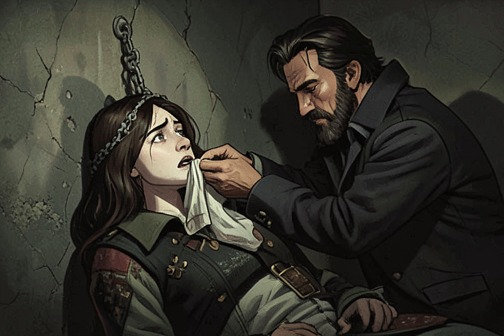
Y/N’s abduction and imprisonment mark a sharp transfer of agency: after being rendered helpless in her own room, she awakens isolated, chained to a wall, and vulnerable to [Jinyoung](entity:character-recall-character-jinyoung-1aab582dd2c6)’s attempt to consume her blood. The episode turns disguise, confinement, and bodily violation into a concentrated expression of the threat posed by the green-eyed faction.
## Abduction and Deception
The event begins after a flashback ends and Y/N stands up intending to take a shower. Before she can reach the door, an unseen attacker covers her mouth and announces that she has been caught. When she screams, the attacker covers her mouth again, this time pressing cotton with a strange smell against it. The substance makes Y/N extremely tired, and the attacker tells her to sleep. The method removes her ability to call for help while preserving the uncertainty surrounding the captor’s identity.
The deception extends beyond the initial assault. In a point-of-view shift, an unidentified figure observes that girls act strangely and reveals that the figure has changed into Y/N. This transformation creates a false double capable of moving through the castle or approaching the others under Y/N’s appearance. The kidnapping therefore attacks more than Y/N’s physical freedom: it also makes her identity usable as a disguise, placing her relationships and the safety of the people around her under suspicion.
## Confinement and Loss of Control
When Y/N regains awareness, she remembers what happened and wonders whether she has been kidnapped. Her surroundings provide an immediate physical answer. She tries to reach the walls to inspect the room, but something around her ankle makes her fall. A chain is fastened around the ankle and attached to the wall, converting the room into a prison and reducing even a simple attempt to investigate it to a struggle against restraint.
The chain establishes a progression from temporary incapacitation to deliberate imprisonment. The cotton-induced exhaustion takes away Y/N’s immediate resistance; the chained ankle prevents escape after consciousness returns. Her body is treated as something that can be subdued, fixed in place, and later exploited. The episode’s central value shift is consequently from ordinary movement to enforced immobility, with Y/N forced to understand her situation only after the means of leaving have already been removed.
## Blood Extraction and Immediate Stakes
The imprisonment becomes a direct assault on Y/N’s life when Jinyoung enters the room and tells her that she cannot escape the group anymore. He wraps his arms around her to prevent movement, while Y/N continues struggling to get free. His words frame the encounter as the completion of a pursuit rather than a spontaneous attack; his admission that he has waited a long time for this moment also connects the violence to an established desire. He then places his mouth against the skin near her neck and bites her, drinking her blood while she tries to push him away. As the feeding continues, Y/N’s strength gradually fades, turning the chain and Jinyoung’s physical hold into overlapping forms of control. Her silent plea for someone to help her underscores the episode’s most severe reversal: the captive is not merely prevented from leaving but reduced to a human blood source whose body is being consumed by the captors.
## Narrative Function and Wider Pattern
The episode belongs to a recurring pattern in which Y/N is displaced from apparent safety, confronted by an uncertain pursuer, and forced into a threshold between ordinary human life and the supernatural conflict surrounding the castle. Earlier movements in that pattern include her mother abandoning her after making her leave the car, her discovery of her mother’s bloodied body, and her encounter with [J-Hope](entity:character-recall-character-j-hope-4d72d56c93de) after running away. The mirror later becomes another instrument of involuntary passage when a shadow pulls her through it after [Jin](entity:character-recall-character-jin-962fbeb69b78)’s body falls, making physical space itself unstable. Against these earlier forms of loss and dislocation, the present abduction is distinguished by its calculated impersonation and sustained restraint: the attackers do not merely remove Y/N from one place but make her appearance portable, turn her room into a prison, and use her blood as the immediate stake of the encounter. The sequence therefore prepares the broader struggle over who may control Y/N’s body, identity, movement, and access to the others; later images of [Jackson](entity:character-recall-character-jackson-aa079ef98c23) seizing her as she tries to run, a blood-red moon freeing her from tightening restraint, and Y/N joining hands with her light and dark selves show that captivity repeatedly precedes a contest over recovered agency.
## Narrative Function and Wider Pattern
The abduction belongs to a recurring pattern in which Y/N is displaced from apparent safety, confronted by an uncertain pursuer, and forced across a threshold between ordinary human life and the supernatural conflict surrounding the castle. Earlier movements in that pattern include her mother abandoning her after making her leave the car, her discovery of her mother’s bloodied body, and her encounter with J-Hope after running away. The mirror later becomes another instrument of involuntary passage when a shadow pulls her through it after Jin’s body falls, making physical space itself unstable. Against these earlier forms of loss and dislocation, the present abduction is distinguished by its calculated impersonation and sustained restraint: the attackers do not merely remove Y/N from one place but make her appearance portable, turn her room into a prison, and use her blood as the immediate stake of the encounter. The sequence therefore prepares the broader struggle over who may control Y/N’s body, identity, movement, and access to the others; later images of Jackson seizing her as she tries to run, a blood-red moon freeing her from tightening restraint, and Y/N joining hands with her light and dark selves show that captivity repeatedly precedes a contest over recovered agency.
Event 16
Y/N身世记忆的揭示

Y/N’s recovered birth-origin memory is the revelation that redefines the protagonist’s abandonment, family history, and place within the supernatural conflict. It begins in an indeterminate white space, where an unseen voice announces that the two have finally met after a long separation. The speaker is Y/N’s real mother, although Y/N no longer recognizes her. Rather than offering a simple reunion, the mother becomes a guide through suppressed history, leading Y/N into a memory whose meaning has been obscured by time, trauma, and later supernatural interference.
## Causes and Background
The memory answers a question planted at the beginning of Y/N’s life. Y/N’s mother once told the child to leave the car and take personal belongings along, then shut the door and drove away before Y/N could return. The abandonment was experienced as an immediate catastrophe: Y/N called after the departing car, feared being lost, and watched the vehicle disappear into the distance. Later, Y/N found the mother apparently dead inside the family home, lying on the floor in a pool of blood, which made the earlier abandonment even more difficult to interpret. The recovered vision does not erase those experiences, but it reveals that the separation was part of a concealed history rather than an isolated act of ordinary parental rejection.
The memory is also prepared through objects and gaps in knowledge. Y/N discovers and unlocks a book with a key, then reads an entry beginning with the date 14 April and the statement that something strange happened that day. The book functions as a material witness to a past that Y/N cannot access directly. Yet even this written record is not sufficient on its own: the decisive account arrives through the mother’s supernatural appearance and her offer to return to the past. The story therefore distributes memory across testimony, objects, visions, and altered consciousness instead of treating recollection as stable or naturally available.
## What Happens
The mother tells Y/N that she can help find the answers to the questions surrounding her departure. She acknowledges the repeated questions of why she left and takes Y/N’s hand before instructing Y/N to watch closely. A woman then appears who looks like the mother standing beside Y/N. The doubled image makes the scene both intimate and uncanny: Y/N is not merely hearing an explanation but witnessing a past self or past moment staged before them.
The central revelation is visual and concrete. The woman is carrying a crib, places it beneath a bridge, and leaves. Y/N recognizes the infant as the self who was abandoned and directly asks why the mother put the child there that night. This scene supplies the missing origin behind the later memory of being left alone. It also changes the meaning of the bridge: the location is not simply a place of childhood danger but the site where Y/N’s identity was deliberately separated from the mother and from any accessible account of the family’s past.
The vision broadens beyond Y/N’s infancy. In another remembered scene, a door opens and the mother enters a richly appointed room while appearing neither older nor younger. [Jin](entity:character-recall-character-jin-962fbeb69b78) is present there as a child. He wakes, immediately retreats from the woman, and asks who she is and where he is. The mother reassures him that he is safe, but his fear shows that Y/N’s mother is connected to a supernatural past involving more than Y/N alone. The scene places Jin’s childhood alongside Y/N’s birth history and suggests that the mother’s role included intervention, concealment, or protection within a larger chain of extraordinary events.
The recollection does not unfold as a complete, orderly biography. After the scene with young Jin, the room turns white again and Y/N returns to the place with four mirrors, asking whether that was all. The return to the mirrored setting marks the limits of what has been disclosed. The vision provides an essential image rather than total knowledge, leaving Y/N with a confirmed origin and a renewed awareness that further answers remain controlled by the conditions of the supernatural encounter.
## Memory, Control, and Consequences
Y/N’s recovered memory belongs to a wider conflict over the right to remember. Jin explains that he sacrificed his power to lock seven other supernatural beings inside a mirror and then used what remained of that power to make the wounded group forget that other people had ever been there. His account establishes that memory alteration is an active supernatural instrument, used to contain danger and reshape the survivors’ understanding of events. Y/N’s mother similarly controls access to the past by choosing what to show and when to show it, while the mirror spaces determine when the vision begins and ends.
This politics of memory culminates after Y/N’s later confrontation with [Gehan](entity:character-recall-character-gehan-fa2d31b153a4). Y/N takes a glass ball from one of Gehan’s pockets, pushes him away, concentrates, and imagines the gates of hell into existence amid heavy rumbling. The act presents Y/N as an active wielder of power rather than only the object of others’ decisions. Yet afterward, when Y/N’s condition becomes critical and the others ask what has happened, [Assiah](entity:character-recall-character-assiah-286c5e1e8c00) states that she erased Y/N’s memory. The revelation of Y/N’s origin is therefore framed by a repeated cycle: buried history is disclosed, supernatural power makes that disclosure possible, and another authority later removes the resulting knowledge.
The immediate consequence is not simple liberation. Y/N learns that the mother did leave the child beneath the bridge, but the scene supplies no complete explanation for why that decision was necessary or what the mother intended afterward. The discovery replaces an unanswered accusation with a more troubling structure of knowledge: the abandonment was real, the mother remains entangled with supernatural forces, and the truth has been repeatedly mediated by people capable of concealment and erasure.
## Narrative Significance
The event turns Y/N’s personal trauma into the hidden foundation of the plot’s supernatural world. The abandoned child beneath the bridge, the mother who returns without visibly aging, and the frightened young Jin in the same mysterious environment connect family memory to vampiric history and make private origins inseparable from collective danger. The event also reverses the usual direction of rescue. Y/N is not rescued from the past; Y/N is led into it, made to witness it, and left to confront its consequences.
Its strongest structural function is to expose the difference between possession of a memory and possession of the truth. Y/N can recover the image of the crib, but cannot yet command the whole story behind it. Jin can sacrifice power to impose forgetfulness on others. Assiah can erase Y/N’s supernatural memory after the conflict. Between these acts, remembrance becomes a contested form of power. Y/N’s birth-origin memory consequently marks both a revelation and a warning: the past has been opened, but it remains vulnerable to the same forces that hid it in the first place.
Event 17
Y/N击败Gehan并封锁Gehenna

Y/N defeats [Gehan](entity:character-recall-character-gehan-fa2d31b153a4) and seals [Gehenna](entity:location-recall-location-gehenna-80ca2c7bc5c2) in the decisive confrontation that follows the awakening and integration of her divided supernatural nature. Trapped in a chained place beneath a blood-red moon, she joins her human self with the light and dark aspects of her identity, recovers the power associated with both sides, breaks Gehan’s control, and shuts the gates through which he could return. The event is both a physical victory and a reversal of authority: Gehan is the ruler of Gehenna, but Y/N becomes the one who can deny him access to the world.
## Causes and Background
The confrontation is rooted in the revelation that Y/N’s power has been divided within her. A woman who appears during the crisis tells Y/N that she has come to help, while Y/N’s dark aspect explains that her side has fallen out of control because of what her father did. Y/N’s light aspect then insists that the three selves must work together and merge. The divided figures are not presented as unrelated beings; the dark aspect states that they are all the same person, with the integration allowing the human Y/N to possess her powers fully rather than merely endure them from the outside.
The supernatural conflict also has a specifically infernal dimension. [Bambam](entity:character-recall-character-bambam-fc7694a2002a) identifies Gehan as the ruler of Gehenna itself, while [Jinyoung](entity:character-recall-character-jinyoung-1aab582dd2c6) clarifies that humans call it Hell. Gehan therefore is not simply another enemy in the succession of kidnappings, possessions, and imprisonments that have marked Y/N’s story. His authority is tied to a realm with its own gate, and his threat persists because he claims that, even if sent back, he can return. Sealing Gehenna is consequently necessary not only to defeat him in the immediate struggle but to prevent the conflict from repeating.
## The Fusion of Y/N’s Selves
The integration begins as a deliberate act rather than an accidental change. Y/N, her light aspect, and her dark aspect hold hands in a triangle while the dark aspect tells the ordinary self to concentrate and let the divided powers complete the process. Y/N closes her eyes, and the scene shifts into a different atmosphere. When she opens them, she remains in the chained location, but Gehan is now directly in front of her with blue fire in his hands. The setting has not changed outwardly; the balance of power has.
Y/N describes the transformation as having involved a private conversation with herself, but its consequence is unmistakable. She feels much stronger, moves her right arm, and breaks the chain without needing an external rescuer. The gesture reverses the condition that had defined the earlier scene: the body once immobilized by another force now acts freely, and the restraint gives way at the movement of her own will. Gehan’s apparent fear makes the reversal visible. Y/N recognizes the irony that he is afraid of his own daughter, exposing a familial connection that makes his attempt to dominate her more intimate and more self-defeating.
## The Battle with Gehan
Once free, Y/N tests the new power through telekinesis. She raises her arm and sends Gehan flying with the movement, then moves the arm repeatedly so that he crashes into multiple walls. The violence is not described as a prolonged exchange of equal attacks. Instead, the scene emphasizes control: Y/N directs the space around Gehan, while Gehan is reduced to an object acted upon by her gestures. Her amused response to the power marks a sharp tonal change from fear and confinement to discovery and command.
Gehan still asserts his status as Gehenna’s ruler and argues that he can return even if he is sent back. Y/N answers by changing the objective. She does not merely threaten to defeat him again; she declares that she will lock the gate to Hell. This promise identifies the structural weakness in Gehan’s claim to power. His title may make him ruler of Gehenna, but it does not guarantee unrestricted passage between realms once Y/N controls the threshold.
## The Sealing of Gehenna
Y/N reaches into one of Gehan’s pockets and takes a glass ball from him, announcing that she will keep it. She then pushes him away, concentrates, and imagines the gates of Gehenna into existence. The summoning is accompanied by rumbling, and Gehan realizes that she is carrying out the threat he had dismissed. Y/N throws him through the gates, after which she locks them. The gate slowly disappears, turning the victory into a lasting closure rather than a temporary expulsion.
The glass object remains in Y/N’s hands after the gate vanishes. She senses something there, described as air, suggesting that the object or the power associated with it has changed function once Gehan is removed. The sequence gives the victory a ritual structure: Y/N claims an instrument from the ruler, calls forth the forbidden passage, casts its ruler back into his own domain, and closes the passage behind him. The action joins personal liberation to cosmological repair without presenting the two as separate accomplishments.
## Consequences and Aftermath
The immediate aftermath introduces Y/N’s mother through the return of a blue bubble that grows larger and changes into human form. The figure is Y/N’s mother, who looks worried and asks whether the transformed person before her is really Y/N. Her appearance reconnects the supernatural confrontation to the family history that has shaped it. Y/N had earlier been abandoned by her mother after being left outside the car, and later found the same mother lying on the ground in a pool of blood. Against that history of absence and death, the mother’s reappearance after Gehan’s defeat makes the sealed gate part of a larger revelation about Y/N’s origins.
The victory does not erase the danger imposed on the other characters. [Assiah](entity:character-recall-character-assiah-286c5e1e8c00) later approaches Y/N and the vampires, insisting that she does not mean to harm Y/N. When [RM](entity:character-recall-character-rm-98a96fb2734b) asks what happened, Assiah explains that Y/N had been possessed by her own power. This interpretation reframes the battle: Y/N’s threat was not simply external domination by Gehan, because her uncontrolled power had also become a form of possession. Her fusion therefore resolves an internal division as well as defeating an external ruler.
The curse surrounding Gehan’s influence extends to the others. Bambam is shown with a hole through his chest, suffered while trying to stop Y/N, and Assiah reveals the mark of Gehan on his wrist. She says that all of them have been under the curse for too long and begins concentrating on the energy flowing through the mark. The aftermath thus widens the meaning of Y/N’s victory. Closing Gehenna removes Gehan’s route of return, but the damage, possession, and marks left by his rule still require healing.
## Narrative Significance
This event completes a movement from enforced separation to chosen integration. Y/N’s history repeatedly places her in thresholds she does not control: her mother abandons her beside the road, [J-Hope](entity:character-recall-character-j-hope-4d72d56c93de) finds her after she runs away, a shadow pulls her through a mirror, and [Jackson](entity:character-recall-character-jackson-aa079ef98c23) briefly seizes her from behind while she is trying to escape. In the Gehenna confrontation, that pattern is reversed. Y/N crosses no threshold because an enemy drags her through it; she creates the gate herself, determines who passes through it, and makes it disappear.
The event also converts inherited identity into active agency. Gehan is revealed as Y/N’s father and the ruler of Gehenna, while her light and dark aspects disclose a divided origin connected to what he did. Yet Y/N’s final action does not make her subordinate to either the infernal inheritance or the supposedly purer light. She merges the aspects, retains the powers of both, breaks the chain, and uses them according to her own decision. The decisive transformation is therefore not merely that Y/N becomes stronger. It is that the forces that once defined her as a vessel, a captive, or a possessed body become instruments under her control.
As a climax, the sealing of Gehenna combines recognition, combat, and closure. Y/N learns enough about her divided self to act, defeats Gehan through a visible exercise of telekinetic power, and resolves the larger threat by closing the realm’s gate. The slowly disappearing gate gives the ending a deliberate final image: the passage through which domination could recur is withdrawn from the world, even though the survivors must still confront the curse’s remaining consequences.
Event 18
Assiah抹除Y/N记忆并重置众人生活
[Assiah](entity:character-recall-character-assiah-286c5e1e8c00)’s erasure of Y/N’s memory and restoration of everyone’s lives is the turning point that converts supernatural catastrophe into an imposed form of peace. After Y/N becomes possessed by her own power, Assiah intervenes physically, removes the dangerous memory of the ordeal, separates Y/N from the vampires, and starts dismantling the curse associated with [Gehan](entity:character-recall-character-gehan-fa2d31b153a4)’s mark. The event offers safety and ordinary life, but it also makes Assiah the person who decides which parts of Y/N’s identity may survive.
## Causes and Background
The intervention follows a conflict involving [Gehenna](entity:location-recall-location-gehenna-80ca2c7bc5c2), described by [Bambam](entity:character-recall-character-bambam-fc7694a2002a) as the realm ruled by Gehan and identified by [Jinyoung](entity:character-recall-character-jinyoung-1aab582dd2c6) as what humans call Hell. Under a blood-red moon, Y/N escapes Gehan’s immediate control by taking the glass ball from his pocket, pushing him away, and concentrating until the gates of Hell appear. Her mother then emerges from the blue bubble-like form and recognizes her as Y/N. The rescue is therefore not a simple recovery from danger: it is the culmination of a power awakening in which Y/N’s own supernatural force has become another threat to her body and mind.
Assiah tells the vampires that Y/N is possessed by her own power. Her declaration changes the meaning of the preceding struggle. Y/N is not merely being attacked by an outside enemy; the power that has enabled her resistance has also exceeded her control. Assiah approaches only after the others stop her, assuring them that she does not intend to harm Y/N. She then places her hand inside Y/N’s chest, after which Y/N collapses and is caught before striking the floor. The gesture is invasive and protective at once, embodying the event’s central contradiction: preservation requires an act that overrides Y/N’s autonomy.
## What Happens
Assiah first stabilizes Y/N and tells the others that Y/N will be all right. When [Jimin](entity:character-recall-character-jimin-f9655c4e2151) asks what she has done, Assiah admits that she has erased Y/N’s memory. She explains that Y/N could not live a normal life if she remembered everything that had happened in the supernatural world. The stated purpose is maternal rather than punitive: Assiah has always wanted Y/N to have an ordinary life, and memory becomes the obstacle that must be removed to make that future possible.
The erasure is presented as more than the deletion of isolated images. Assiah says that leaving an empty region in Y/N’s memory would itself be troublesome, so the operation must avoid a visible gap. This implies a reconstruction of continuity rather than a clean subtraction. Y/N is not simply made unable to recall the vampires, the mirrors, Gehenna, or the possession; she is redirected toward a life in which the lost experiences will not announce themselves as absences.
The vampires immediately recognize the cost. [J-Hope](entity:character-recall-character-j-hope-4d72d56c93de) asks whether Y/N will remember them, and Assiah answers that she will not. [Suga](entity:character-recall-character-suga-27f45cc854e4) asks whether there is some way for them to remain with her, revealing that the restoration of ordinary life also destroys the relationships formed during the crisis. Assiah does not offer a shared resolution. Instead, she tells them that she will send Y/N to a new home and leave them to determine what happens afterward.
Assiah then gathers the vampires into a small group and focuses her energy until they slowly disappear. She sends Y/N to a new home and a new life somewhere else, while sending the men back to their own home. The event thus divides the cast spatially and narratively: Y/N receives a future stripped of supernatural knowledge, while the vampires retain the burden of what occurred and return to a life altered by separation.
## The Curse and Its Removal
The restoration extends beyond Y/N’s memory. Assiah notices that Bambam has a hole through his chest from trying to stop Y/N. When she removes part of his sleeve, she finds Gehan’s mark on his wrist and identifies the group as having been under the curse for far too long. She places her fingers on the mark and concentrates on its energy flow, repeating the same act on the others.
The consequence is severe and final. Bambam turns into ashes after Assiah works on the mark at the back of his neck, and the same process is applied to the others. The curse is therefore not lifted through a return to physical normality. Assiah’s cleansing destroys the marked bodies, making liberation inseparable from death. Her act restores the larger order by ending the curse’s physical carriers, but it also leaves the aftermath marked by irreversible loss.
## Consequences and Aftermath
The immediate consequence is a new separation between Y/N and the seven vampires. Y/N is given a new home and a new life without the memories that connected her to them. The vampires are returned to their home without the possibility of openly preserving the past through Y/N’s recollection. Their concern that she will forget them confirms that the event removes not only danger but also mutual recognition.
The event also reorganizes responsibility. Earlier, [Jin](entity:character-recall-character-jin-962fbeb69b78) explained that he had sacrificed his power to lock other beings inside the mirror and used what remained to make the injured vampires forget that the other people had ever existed. Assiah’s later action echoes and reverses that earlier memory intervention. Both acts use forgetting as protection, but Assiah controls Y/N’s entire supernatural history and embeds the change within a new life. Across the story, memory is therefore treated as something powerful characters can administer: it can conceal trauma, prevent recognition, preserve an appearance of normality, or sever a relationship.
Assiah’s decision is compassionate in intention but authoritarian in method. Y/N cannot consent to the erasure, and the vampires cannot negotiate a way to remain part of her future. The mother’s protection depends on deciding that ordinary life is preferable to truth, even when truth includes the bonds Y/N has formed. The result is not a complete restoration of the past but a reset achieved through selective disappearance: Y/N survives with a manufactured continuity, the vampires return separated from her, and the cursed marked beings are reduced to ashes.
## Narrative Significance
As a narrative event, Assiah’s intervention closes the supernatural cycle by replacing revelation with forgetting. Y/N has crossed from abandonment into mirrors, imprisonment, possession, and confrontation with Gehenna; the final maternal act attempts to return her to a human-scale existence. The movement resembles a ritual passage in reverse: after extraordinary spaces and powers have suspended ordinary identity, Assiah forcibly reintegrates Y/N into a new ordinary world.
The event’s emotional force comes from its double image of rescue and erasure. Assiah saves Y/N from the consequences of her own uncontrolled power, yet the cure removes the knowledge needed to understand what was saved. Her hand inside Y/N’s chest makes the bodily cost visible, while the later disappearance of the vampires and the turning of the marked victims into ashes extend the reset from one person to the whole supernatural community. Peace is achieved not by reconciliation or shared remembrance, but by controlled rupture.
The ending consequently leaves the story suspended between mercy and tragedy. Assiah’s intention is that Y/N live normally, and she succeeds in sending Y/N toward that possibility. Yet the normal life is founded on an absence deliberately engineered by the person who knows the truth. The event confirms Assiah as both mother and magical authority: she protects Y/N, determines the shape of her future, removes the memory of the vampires, and attacks the curse at its marked source. What looks like a return to life is therefore also a final demonstration of who possesses the power to define which life counts as livable.
Event 19
BTS Members Become Vampires During Their Impoverished Years
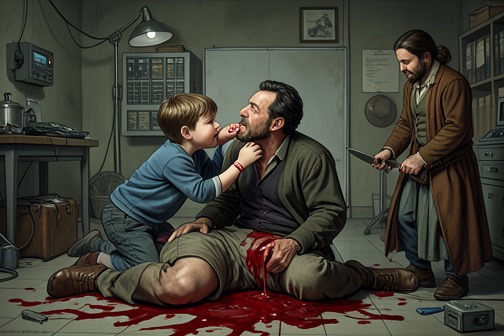
[BTS](entity:organization-recall-organization-bts-f5f93ce03094) members in their impoverished period are transformed into vampires when their human bodies can no longer sustain them. The episode is not presented as a willing initiation into supernatural life but as a desperate intervention by their mother, who explains that they could not survive through their “human” strength and therefore had to be made into vampires. Their altered existence consequently begins in deprivation, coercion, and the management of vulnerable bodies rather than in power or privilege.
## Circumstances of the Transformation
The event emerges through a violent encounter involving a mysterious child and [Jin](entity:character-recall-character-jin-962fbeb69b78). The child arrives with a single stated purpose, declaring that after completing the task, Jin will be the price. He bites another person, cuts his own wrist, and then bites Jin, making blood the immediate medium through which the crisis spreads. The sequence treats the body as both target and instrument: the child’s self-inflicted wound supplies blood, while the bite imposes a transformation whose consequences reach beyond the initial victim.
The danger becomes visible when the child runs toward [RM](entity:character-recall-character-rm-98a96fb2734b) and Jin responds with extreme force, chopping off the child’s left arm with his hand. Yet the severed body does not simply end the threat. Others observe that the child is regenerating and ask how such recovery is possible; [Bambam](entity:character-recall-character-bambam-fc7694a2002a) suspects that a vampire may have entered the place from outside, while further inspection of the child’s teeth leads him to think that the condition may involve a change in DNA. The scene therefore frames vampirism through bodily evidence—bites, teeth, regeneration, and altered biology—before the family explanation names it as the means by which the young BTS members survived.
## The Child’s Assault and the Crisis of Blood
The child’s violence turns the transformation into a crisis of contagion, protection, and uncertain identity. After announcing that Jin would become the price of the completed task, the child bites him and then cuts his own wrist, making the wound part of the attack rather than a sign of weakness. He subsequently bites Jin again, while Jin’s attempt to stop him escalates into dismemberment: Jin chops off the child’s left arm with his bare hand. The apparent victory is immediately undermined when the child’s back begins regenerating, prompting the others to question how such recovery is possible. Bambam responds by investigating the physical evidence, asking whether an outsider vampire has entered and examining the child’s teeth for signs of a DNA-altering condition. The episode thus presents the supernatural change through a sequence of damaged, examined, and repairing bodies, leaving the characters to interpret vampirism as both an attack and a biological alteration before its larger survival function is disclosed.
## The Mother’s Explanation and the Meaning of Survival
The physical crisis is ultimately reinterpreted through the mother’s explanation of why the young BTS members were changed. She states that they could not survive on their “human” strength, so they had to be made into vampires. This account shifts the event from an unexplained attack to a forced act of preservation: vampirism is imposed because ordinary human endurance has failed. The transformation therefore carries an unresolved double meaning. It saves the children from death, but it also replaces the human condition they once possessed with a supernatural state whose origin lies in necessity rather than consent. Their later existence as vampires is consequently rooted in an act of protection shaped by desperation, making survival inseparable from bodily alteration and loss.
## Memory, Disclosure, and the Reframing of Origin
The transformation is also inseparable from the story’s unstable control of memory. At one point, Jin explains that he sacrificed his power to lock the green-eyed entities inside the mirror, establishing that supernatural history is preserved through partial testimony and confinement rather than openly shared knowledge. The earlier discovery of a written account, which Y/N opens and reads while alone in her room, provides another model of delayed revelation: the past survives in objects until someone is willing or able to interpret it. This structure places the vampire origin within a wider politics of disclosure. The mother’s explanation supplies the crucial fact that human strength had failed, but later acts of concealment alter how that fact can be understood; [Assiah](entity:character-recall-character-assiah-286c5e1e8c00) admits that she erased Y/N’s memory, while the room suddenly turns white, marking a rupture between experienced history and accessible recollection. The conversion of the BTS members therefore functions not only as a bodily rescue but also as a buried collective trauma, one whose meaning is repeatedly recovered, concealed, and reorganized by those who possess supernatural authority.
## The Transformation as a Foundational Trauma
The conversion of the young BTS members is best understood as a foundational trauma whose effects continue after the immediate danger has passed. The episode begins with physical vulnerability: the children cannot endure through human strength, and the mother’s intervention preserves their lives by changing what their bodies are. Survival is therefore achieved through a loss of bodily continuity. They remain themselves in one sense, yet the condition that allows them to live also separates them from ordinary human existence and binds them to blood, altered biology, and supernatural dependence.
The event’s violence makes that contradiction visible rather than abstract. The mysterious child’s attack places Jin and the others in a situation where protection requires equally extreme bodily force. Jin’s response to the child’s assault is not a controlled ritual but an immediate attempt to stop a threat that moves toward RM; even dismemberment fails to resolve the danger because the child’s body regenerates. The scene consequently denies the characters a stable boundary between injury and recovery, human and vampire, victim and aggressor. Bodies can be wounded, used, examined, and remade, while the meaning of those changes remains uncertain until someone with authority explains them.
That uncertainty also shapes the group’s later relationship to its own past. The origin of the vampire state is disclosed through the mother’s account, but other supernatural truths remain fragmented across testimony, written records, sealed mirrors, and erased memories. Jin’s recollection of sacrificing his power to imprison the green-eyed entities shows that even a central participant can reveal history only in partial form. Y/N’s reading of a written account while alone in her room similarly turns memory into something mediated by an object rather than freely inherited from the people involved. Assiah’s admission that she erased Y/N’s memory makes the politics of remembrance explicit: supernatural survivors do not merely suffer the past; they can also control who is permitted to retain it.
Within that larger pattern, the conversion of BTS becomes more than an origin story for vampirism. It is the buried event that explains why their extraordinary existence carries both protection and deprivation. The transformation saves them from the failure of human endurance, yet its coercive circumstances prevent it from functioning as a simple gift. Later revelations do not erase the violence of that beginning; they clarify why the characters’ identities, loyalties, and fears remain tied to the question of who changed their bodies, who concealed the truth, and who has the power to restore or destroy memory.
## Disclosure, Memory, and Origin
The transformation is inseparable from the story’s unstable control of memory. Jin later explains that he sacrificed his power to lock the green-eyed entities inside the mirror, showing that supernatural history survives through partial testimony and confinement rather than open disclosure. Y/N’s discovery of a written account offers another form of delayed revelation: while alone in her room, she opens and reads a record that preserves information unavailable through ordinary conversation. These moments place the vampire origin within a broader politics of remembrance. The mother’s explanation establishes that human strength had failed, but later acts of concealment determine who can understand the consequences of that failure. Assiah admits that she erased Y/N’s memory, and the sudden whitening of the room marks a rupture between experienced history and accessible recollection. The conversion of the BTS members therefore functions not only as bodily rescue but also as buried collective trauma, repeatedly recovered, concealed, and reorganized by figures who possess supernatural authority.
## The Transformation as a Foundational Trauma
The conversion of the young BTS members is best understood as a foundational trauma whose effects continue after the immediate danger has passed. The event begins with physical vulnerability: the children cannot endure through human strength, and their mother preserves their lives by changing what their bodies are. Survival is therefore achieved through a loss of bodily continuity. They remain themselves in one sense, yet the condition that allows them to live also separates them from ordinary human existence and binds them to blood, altered biology, and supernatural dependence.
The violence surrounding the change makes that contradiction visible. The mysterious child announces that Jin will become the price after the child completes a particular task, then bites him and cuts his own wrist. When the child moves toward RM, Jin responds by chopping off the child’s left arm with his hand, but the apparent victory collapses when the damaged body begins to regenerate. Bambam’s questions about whether an outside vampire entered the place, followed by his inspection of the child’s teeth for evidence of a DNA-changing condition, show the group trying to understand vampirism through observable injuries, bodily repair, and biological alteration. The scene refuses a stable boundary between human and vampire, victim and aggressor, or injury and recovery.
That uncertainty shapes the group’s later relationship to its own past. The origin of the vampire state is disclosed through the mother’s explanation, while other supernatural truths remain fragmented across testimony, written records, sealed mirrors, and erased memories. Jin’s account of sacrificing his power to lock the green-eyed entities inside the mirror demonstrates that even a central participant reveals history only partially. Y/N’s reading of a written account while alone in her room similarly turns memory into something mediated by an object rather than freely inherited from the people involved. Assiah’s admission that she erased Y/N’s memory makes the politics of remembrance explicit: supernatural survivors do not merely suffer the past; those with authority can determine who is allowed to retain it.
Within this wider pattern, the conversion of BTS is more than an origin story for vampirism. It is the buried event that explains why their extraordinary existence carries both protection and deprivation. The transformation saves them from the failure of human endurance, but its coercive circumstances prevent it from functioning as a simple gift. Later revelations do not erase the violence of that beginning; they clarify why the group’s identities, loyalties, and fears remain tied to who changed their bodies, who concealed the truth, and who possesses the power to restore or destroy memory.
## Narrative Significance
The conversion of the young BTS members is more than an origin story for vampirism: it is the buried event that explains why their extraordinary existence carries both protection and deprivation. Their mother’s explanation gives the transformation a survival logic, but the surrounding assault prevents that logic from becoming a simple act of rescue. Blood, biting, self-inflicted injury, regeneration, and the investigation of altered teeth make the body the first archive of what happened, while later testimony and written records supply meanings that the body alone cannot settle. The episode therefore establishes a lasting contradiction at the center of the group’s identity. [Vampirism](entity:state-recall-state-vampirism-041a5c9665c3) preserves life after human strength has failed, yet it also severs the survivors from ordinary human existence and binds them to a history shaped by coercion, secrecy, and dependence. Its significance deepens through the story’s treatment of memory: Jin’s account of sacrificing his power to imprison the green-eyed entities, Y/N’s discovery of a written record, and Assiah’s admission that she erased Y/N’s memory all show that the past is never simply available to those who lived through it. It is disclosed, sealed, read, or removed by figures who control supernatural power. Later revelations consequently do not cancel the violence of the transformation; they make clear why the group’s identities, loyalties, and fears remain tied to who changed their bodies, who concealed the truth, and who has the authority to restore or destroy memory.
Event 20
BTS成员与Y/N开始共同的新生活
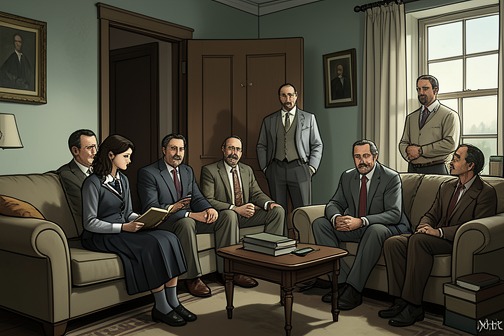
[BTS](entity:organization-recall-organization-bts-f5f93ce03094) members and Y/N begin a shared new life after the supernatural conflict has been forcibly reset. The event is decisive because it converts a history of abandonment, captivity, bodily danger, divided identity, and manipulated memory into an apparently ordinary household in which Y/N attends college and the seven men occupy recognizable domestic and working roles. Its calm is therefore not a simple return to normality: it is a new arrangement built after [Assiah](entity:character-recall-character-assiah-286c5e1e8c00) makes the group disappear and sends Y/N to a new home, leaving the past hidden behind familiar routines.
## From Abandonment to a New Household
Y/N’s shared life begins against the memory of an earlier rupture. At sixteen, Y/N is identified as a girl, and her adoptive mother abandons her by opening the car door, telling her to go outside, then driving away before Y/N can follow. The scene establishes separation as the condition from which the later household must be understood. Y/N is not merely moving into a different residence; she is being displaced from the family structure she believed defined her.
That displacement is compounded by the discovery that the woman who raised Y/N is not her biological mother. Y/N asks who her real parents are and why they abandoned her, turning the question of family into one of the story’s central unresolved wounds. The later shared home answers that wound socially rather than genealogically. Y/N’s belonging comes through continued association with BTS members, even after the supernatural explanation of that association has been removed from her accessible memory.
The transition is also marked by repeated changes in place and bodily control. A shadow pulls Y/N through a mirror whose surface feels like water, trapping her inside the mirror world. In another crisis, someone grabs her from behind just as she tries to run. A red light then falls upon her beneath a blood-red moon, releasing her movement. These episodes make freedom unstable: Y/N repeatedly enters spaces where others control her body, only to regain agency through an external intervention or a newly awakened power. The later household reverses that pattern by presenting shared life as a place where movement, study, work, and ordinary meals are possible.
## The Reset and the Reassembled Family
Assiah oversees the decisive break between the old world and the new one. After the conflict, Assiah asks the others to stand together in a small group, focuses energy, and makes them slowly disappear. The disappearance is not described as a natural departure or a voluntary migration. It is an act of supernatural rearrangement that separates the characters from the lives they have just endured and prepares their placement in a new social reality.
The reassembly does not erase every trace of the former group’s identity. Instead, it preserves the practical fact that the members remain together and that Y/N becomes connected to them again. Y/N remembers that, since the group moved in, life has been fun. The new home is thus characterized less by an explanation of its origin than by an emotional and domestic effect: solitude has been replaced by companionship, and an existence once organized around fear now contains routine and amusement.
The event’s most important ambiguity lies in the difference between objective history and Y/N’s point of view. Y/N wakes in the morning to an alarm, gets up while still half asleep, and later walks to a bus stop while eating a sandwich. The scene is narrated as a normal day, but the reader knows that this normality follows memory alteration and the suppression of supernatural knowledge. The everyday sequence functions as evidence of successful reintegration while also preserving the unsettling question of what has been taken from Y/N in exchange for safety.
## Domestic Roles and Everyday Cooperation
The new household is organized through a division of occupations and habits. Most of the men are no longer in college. [Jin](entity:character-recall-character-jin-962fbeb69b78) is mostly at home and is compared to a motherly presence, suggesting that domestic care has become part of his role. [RM](entity:character-recall-character-rm-98a96fb2734b) works, although he has never told Y/N where. The lack of detail surrounding his employment reinforces the selective quality of the new life: Y/N knows enough to treat the household as familiar, but not enough to recover its hidden structure.
[J-Hope](entity:character-recall-character-j-hope-4d72d56c93de) works at an animal veterinary clinic and sometimes returns home with blood bags, which he explains as being for research. The explanation gives a mundane professional cover to an object strongly associated with the group’s concealed nature. Blood therefore survives in the new life as a practical detail that can be interpreted innocently, even though earlier Y/N was treated as the only human blood vessel among the group. V had challenged Y/N by asking who the only blood vessel was, while Y/N rejected the label and insisted that she was not one. The shared household changes the social meaning of that conflict: Y/N is no longer introduced primarily as a source of blood, but the blood bags still preserve the old danger beneath the domestic surface.
[Jimin](entity:character-recall-character-jimin-f9655c4e2151), V, and [Jungkook](entity:character-recall-character-jungkook-40c36baa104a) attend college with Y/N. Their attendance at the same college is explained through the possibility that they are interested in it as well, but the arrangement also keeps the group physically connected during Y/N’s daily life. The college becomes a shared public space rather than an isolated setting for Y/N alone. The men’s presence makes the new life communal even when their past is not discussed.
The routine includes small gestures of mutual care. After school, Taehyung appears, explains where he has been, and gives everyone rice balls. The food is an especially concrete sign of the household’s altered rhythm: instead of a scene centered on blood, pursuit, or imprisonment, the group gathers around something prepared and distributed as an ordinary kindness. The new life is sustained through these modest exchanges, which make the supernatural group legible as roommates and companions.
## Y/N’s Agency Within the New Arrangement
The reset changes what Y/N can know, but it does not entirely remove the history of her resistance. Earlier, when faced with the choice between pursuing the truth about her parents and saving companions trapped in a dark bubble, Y/N decides that saving them matters more than knowing who or what her parents are. That decision establishes an ethical priority: chosen bonds take precedence over biological origins. The new life follows the same principle, because Y/N’s place among BTS members is grounded in shared existence rather than recovered ancestry.
Y/N also develops direct control over the power that once made her vulnerable. After joining hands with her light and dark selves in a triangle, Y/N concentrates with them. When she later moves her right arm, the chain holding her breaks, and [Gehan](entity:character-recall-character-gehan-fa2d31b153a4) appears frightened. Y/N identifies the reversal in their relationship by asking why Gehan would fear his own daughter. The moment transforms Y/N from an object of ritual control into the person capable of breaking the restraint. It also clarifies that the new life follows a struggle in which Y/N has actively confronted both captivity and inherited power.
Her confrontation with her mother carries the same refusal of submission. Suspended at least five meters above the ground, Y/N is told to come down because she cannot control her power. Y/N responds by questioning whether the power is meant to be taken from her or claimed by her mother, then declares that her mother is no different from her father. The new household therefore does not follow a passive rescue in which Y/N simply receives protection. It follows a conflict over ownership of her body, memory, and power, and its apparent normality depends on Y/N having asserted herself within that conflict.
## The First Day of the New Life
The account of the shared household is framed by a flashback. Y/N, walking back from a part-time job, encounters a group of six, then realizes there are seven people. They stop in front of her and ask whether they can become roommates. Y/N agrees because being alone is boring, and the group responds with enthusiasm. The memory presents cohabitation as an informal, almost casual invitation, concealing the extraordinary chain of events that led to it.
That framing makes the new life feel both intimate and manufactured. Y/N’s acceptance is motivated by loneliness and the prospect of companionship, while the reader can recognize how strongly it echoes the earlier abandonment. At first, Y/N is left alone in an unfamiliar place; later, Y/N chooses not to remain alone and allows seven strangers to enter domestic life. The same social need that made abandonment painful becomes the opening through which a substitute family is formed.
The morning commute completes the contrast. Y/N leaves for college by bus, sits beside the window, and thinks about the different lives of the people at home. The household is no longer a castle, a mirror passage, or a site of ritual danger in the immediate narration. It is a group of roommates whose work and school schedules structure the day. Yet the reader’s knowledge of the suppressed past makes every ordinary detail unstable: J-Hope’s blood bags, the men’s unusual closeness, and their continued presence around Y/N all carry meanings the reset has hidden from her.
## Narrative Significance
BTS members and Y/N begin a shared new life as the story’s movement from supernatural crisis into apparent domestic closure. The event gathers the narrative’s recurring oppositions—abandonment and belonging, captivity and movement, imposed identity and self-definition, blood and food, secrecy and routine—into a single altered arrangement. Y/N’s life has not been restored to the family she lost; it has been rebuilt around a chosen collective whose members now occupy the roles of roommates, workers, students, and caregivers.
The ending is consequently double. From Y/N’s perspective, the result is a pleasant and usable life: she wakes for class, travels to college, and describes the period since the roommates arrived as fun. From the reader’s perspective, the peace depends on Assiah’s intervention and on the removal of memories that once explained the group’s danger and Y/N’s origin. The shared life is genuine in its daily affection, but it is also the product of a supernatural reset. Its final power comes from that tension: ordinary happiness survives, while the buried story continues to define what that happiness has cost.